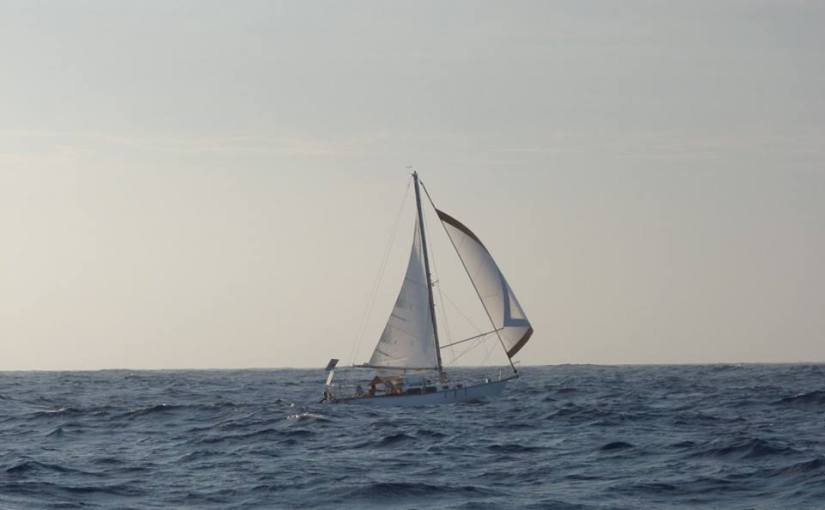
Blogging in the Boatyard

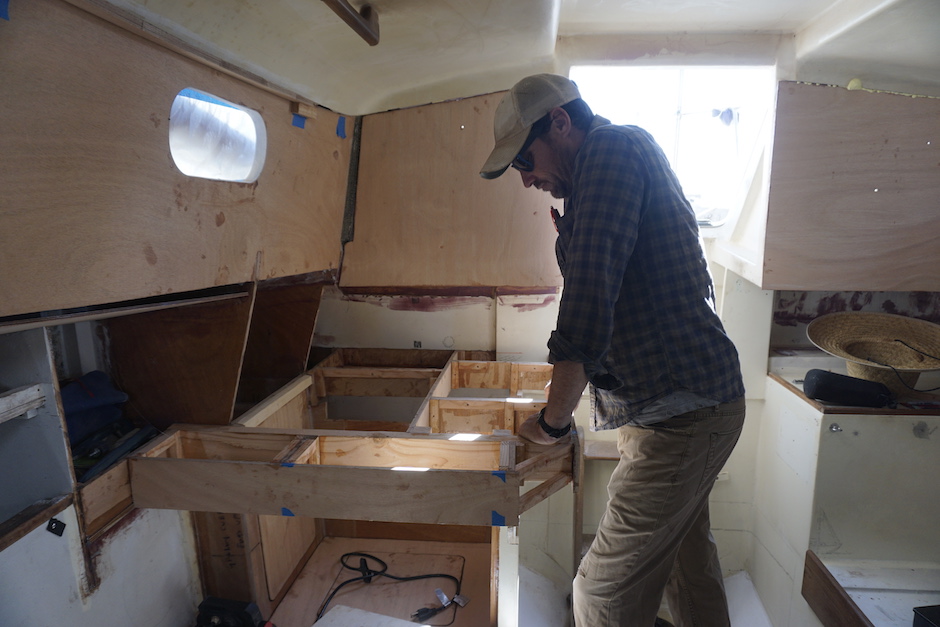
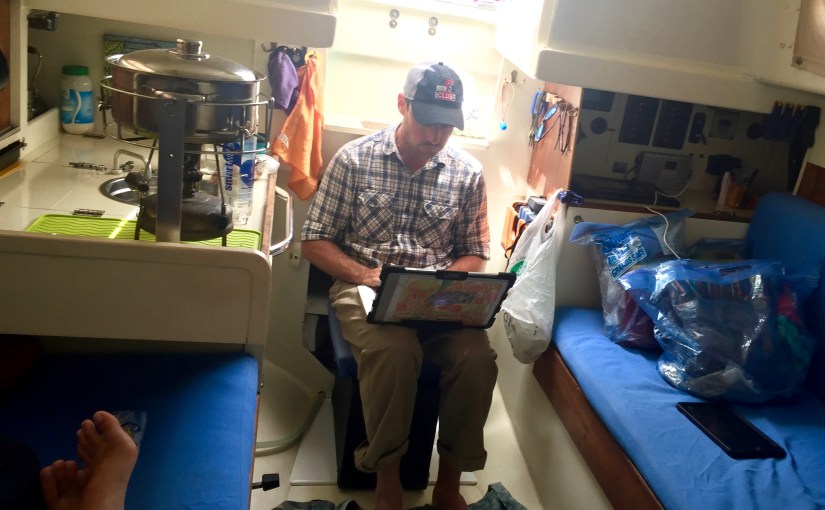
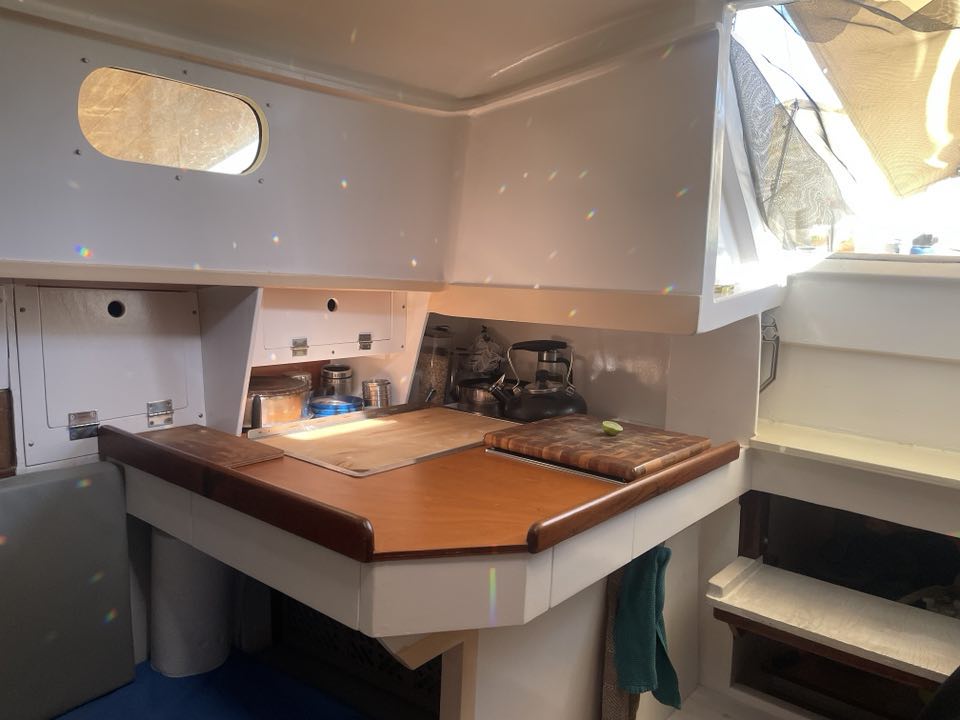
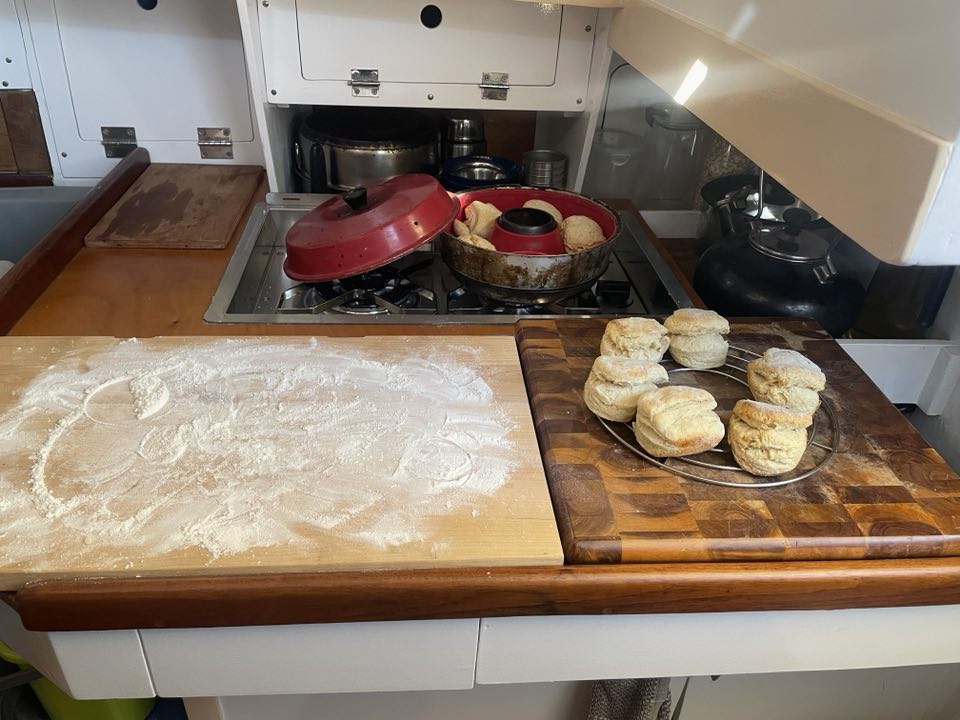
Dawn Treader has been on land for 20 months, and we’re finally cooking with gas. We lit our new propane stove for the first time last week, and were both impressed and slightly intimidated with the heat and power of the burners. The new propane stove is faster and quieter than our kerosene primus stove, and this improvement happened at the perfect moment.

Let’s say that channel fever, a restlessness many sailors experience towards the end of a journey, begins when a passage is approximately 80% to 90% complete. And let’s assume that this refit is an ongoing journey, a stationary voyage, that began with Dawn Treader’s haul out and will end with her splash. Now, with somewhere between a couple and a few months left, we are restless with channel fever.

I feel it, and cooking faster seems to help tamp down my precipitous emotions. Furthermore, cooking with gas represents the act of nearly completing the galley rebuild, which feels good. Almost all of our projects, and the refit at large, are nearly complete. Although this state has infected us with channel fever, being nearly complete is still better than our prior state: indefinitely slogging onward.
We have been in over our heads for 20 months, but we’ve been fine with that. We know how to tread water. This refit demands constant energy and effort, and we’ve delivered both. Our dream, our memory, of a simple life on the water keeps us motivated. The biggest weight, however, and the one thing that threatens to drown us, is time. Time frustrates us because we have been unable to accurately estimate how long things will take. A sailor here recently told us this is Hofstader’s law (named after Douglas Hofstader). The law states that a task will always take longer than you expect, even when Hofstadter’s law is taken into account. We see this happening all around us. It seems impossible for most sailors to predict the exact length of their complicated projects.

Time becomes an important player when you are paying rent, when you’re in a boat out of the water, and when you’re managing expectations. Time becomes a nuisance. Time facilitates stress. Before this refit, we had benched Time. It sat on the sidelines of our lives while other things played for the win, things like beauty, curiosity, wonder, and simplicity.

Keeping up this blog has always been difficult. When we’re away from civilization or land, it is not easy to stay in touch. I thought that being present in both, for so long, would make things easier. But, we still haven’t found our land legs, and I’m not sure we will. Awkwardness and difficulty adapting to a busy, noisy life on land have gotten in the way of blogging. These refit months have also been packed with design, labor, material procurement, and research, and this has limited our bandwidth for creating complete written sentences. 

Channel fever, however, has inspired impatience, and it seems wise to use this restless energy to blog, to connect and to share. Eventually, we’d like to show you some before and after pictures of our projects (whenever they are finished), and take you through our refit bit by bit. The transformation of our boat is almost complete. She’s not the tired, weathered old girl that sailed here. She’s almost ready for the next adventure. 

I look forward to writing about sailing and traveling again. But for now, thank you for sharing my break from boat work, to read something of what it’s like in the boatyard, aboard Dawn Treader, where we’re happy to be cooking with gas. 

Video: Cubic Mini Cub Wood Stove

We are loving springtime in Uruguay, and we’ve made the time to reflect back on winter in Uruguay with our new Cubic Mini Cub wood stove. We hope you enjoy the video!

Thank you Chuck for bringing us the wood stove, and for all the tips on birding!

Beach combing

There is so much to see at the beach. The aliveness of the environment is fed by the constant movement of the sea. What draws my attention to a beach treasure is usually color or shape. When I pick up a smooth friendly little item, rub it with my thumb, and put it in my pocket, it becomes a little talisman, imprinted with the tranquil mood that accompanies my time on the beach. Somewhere in my mind I am also building a mosaic, imagining all my little gems together in a colorful display. However, it seems more satisfying to keep them loose, to be handled and tumbled in and out of their bag as the collection grows.
Continue reading Beach combing

Fishing in Cape Verde

Approaching 4 weeks in Mindelo and fully recovered from a stomach bug, we decided it was a good time to move. After scrubbing below the waterline and filling the water tanks, we checked out of Mindelo to sail 130 miles to Tarrafal on Santiago. The passage was short, under 30 hours, but proved to be exciting. Continue reading Fishing in Cape Verde

in Santa Cruz de La Palma

Sunday-October 16, 2016-Santa Cruz de La Palma, Canary Islands

In order to stay connected to family and friends, and engage anyone interested in long term cruising, we will begin making regular posts based on excerpts from my log. This will be a catch all space for the activities of Dawn Treader and her crew.

This Week…

We split taxi fare with new friends Matt and Amy (SV Florence) to the top of La Palma, approximately 2,400 meters up. In the cab Amy commented on how peculiar it felt to be Continue reading in Santa Cruz de La Palma

Anchoring in the Azores

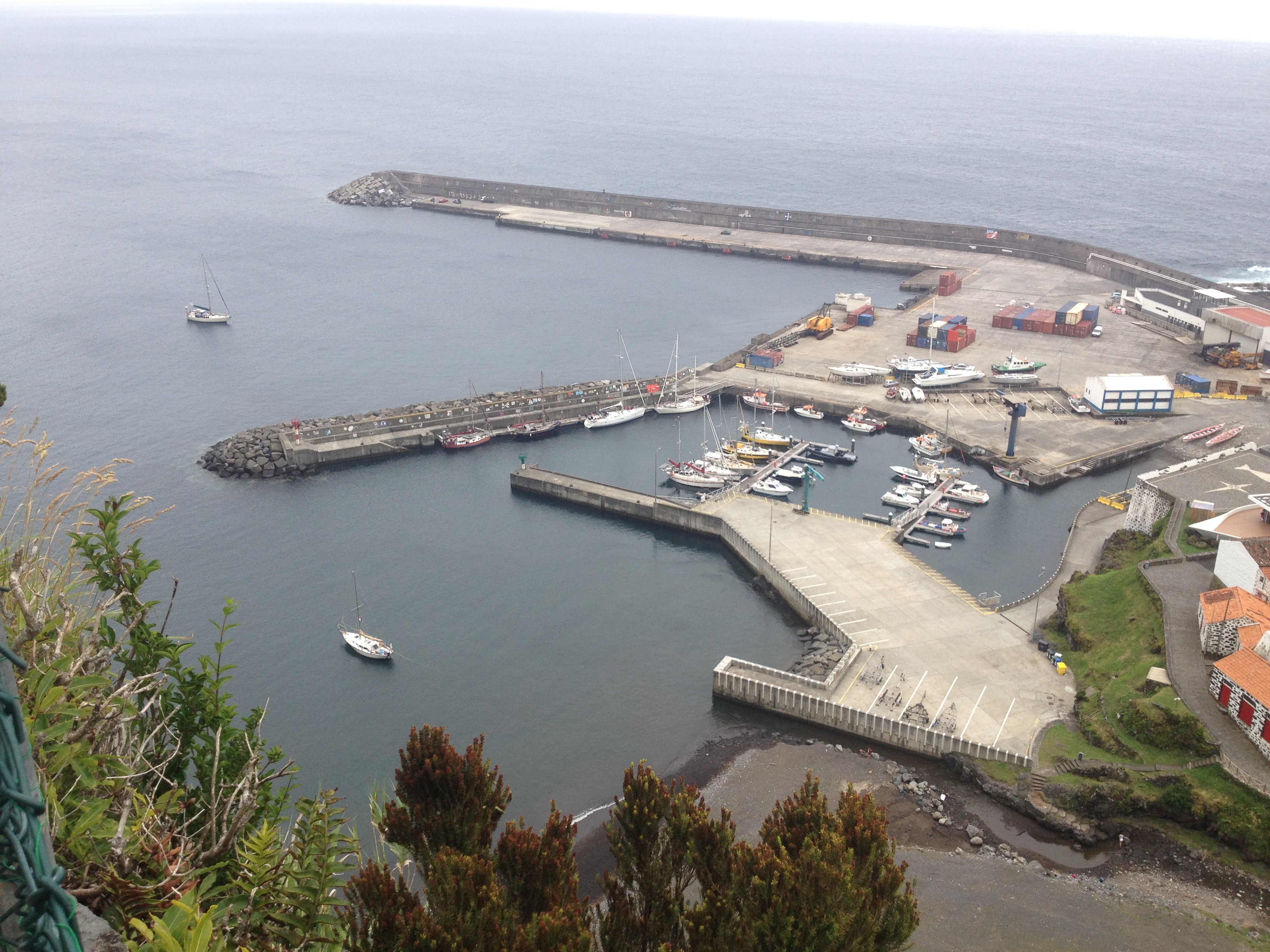
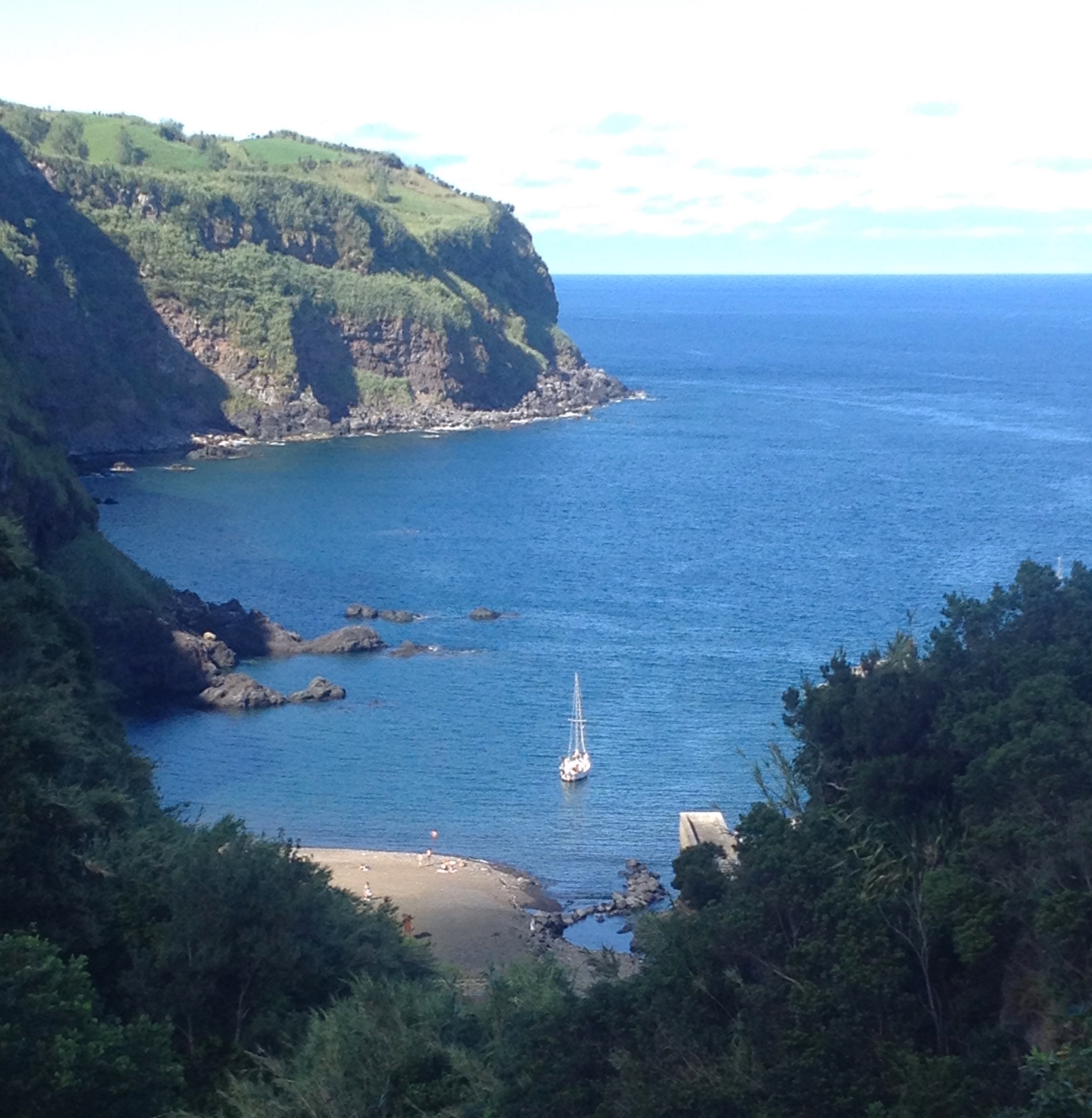
Making landfall in Flores, Azores is special. The glorious, verdant island was a welcome sight after our 21 day passage from Bermuda. Even better, there are anchorages available, happy places for cruisers on a budget.

While in Lajes, we anchored in the best possible spot, right off the beach. This small area of the harbor only has enough room for a couple of cooperating boats; most vessels stay in the marina, or out beyond its walls. We set two anchors to keep our bow oriented to the occasional eastern swell that worked its way into our nook. We enjoyed three weeks in this setting. Lots of walking showed all of southern Flores, lots of bucket laundry helped us remember how to be good “housekeepers” aboard, and lots of time spent in one spot helped us make good friends on the island.

We slept regardless of the loud cries of mating shearwaters. We love these birds, their apparent strength always reassures us when on long ocean passages. Each night, they circled our mast, calling to each other, and nesting in the nearby cliff. One night we stirred to a new sound, rain, lots of rain, poured over Flores, but it was not the rain that woke us, but rapids. The tiny stream alongside the beach had transformed into a river, funneling out all the rainwater from the nearby peaks and their valley.

It was a good thing our stern anchor was our storm anchor, it was firmly dug in, and it kept us from being spun around into rocky surroundings by the rolling waves. However, our Fortress anchor became buried in a few feet of washed out sediment. Despite futile efforts to dig it out (these were mostly encouraged by stubborn Deb, who admitted defeat after a fun session of kicking and digging around the anchor chain with her sport sandals at low tide), it was stuck.

anch-azores-3
Anchored at the beach, before the streambed washed out.

DCIM103GOPRO
After the wash out, notice the new stream side boulders near the concrete wall, and the breaking wave that shows the anchor location and reach of the new sediment pile.

anch-azores-4
Dawn Treader from another view, the stream is now quadrupled in width, and this section of beach has been pushed out over the anchor.

We left the anchor and it’s thirty feet of chain to sail around the island to Faja Grande. With an east wind this otherwise exposed anchorage was a wonderful place to walk from! We let out all our chain over the rocky bottom where our Rocna sat perched. After a few days of exploring up and around the cliffs of Faja Grande, we returned to Lajes, to our lost anchor, for one more reunion before parting ways forever.

Our stay in Horta, Faiel was also dictated by the wind. Ten days at the marina (anchoring was not allowed at the time, during Festival Semana de Mar), waiting for a bit of wind to take us further east. We made awesome new friends aboard a couple of sailboats, while trying to strike a budget balance. Marina fees plus proximity to town can likely equal overspending.

Terceira was our next stop. We anchored under sail in wide open space, enjoyed decent holding in sand, and returned to a rent free lifestyle. Two weeks there included swimming to the beach a good bit, a splurge to explore island caves with friends, and a bit of bussing around. We enjoyed having the boat in a good anchorage, and we felt free, until we didn’t. When we began to raise anchor, we suddenly felt stuck, because we were.

During our stay, we had spun around our anchor with shifting winds, causing the anchor chain to encircle a pipe the thickness of our mast. It randomly protruded about few feet from the bottom at a 45 degree angle. It was a bit deep to dive down and free the chain, so, we worked for a while with Brian in the water trying to free us, lifting a segment of our weighty chain with a buoy, Deb worked the windlass feeding chain in and out. Eventually, we abandoned this technique, and instead turned back time, driving the boat in two large counterclockwise circles with our outboard. Unwrapped, we moved on, thinking how much we enjoyed anchoring in the Azores. It made us feel good that we handled new challenges fairly well, and that we were able to stay at anchor so much in an island group where most skippers tend to choose marinas.

Shakedown

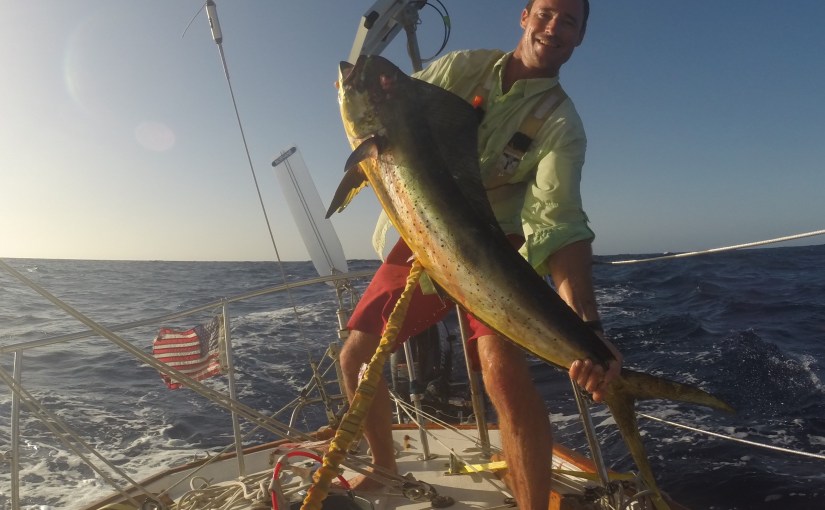
Our Atlantic crossing was a proper shakedown. We experienced a wide range of conditions, and we were able to put our refit modifications to the test. Some of the improvements have exceeded our expectations. We are pleased overall, and we kept a list of notable benefits and drawbacks: Continue reading Shakedown

Video: Atlantic Crossing 2016

Over the last 2 months, we have sailed across the Atlantic Ocean. We acclimated to living amongst the waves and wind during our two passages. The passage to Bermuda took 10 days, the passage to the Azores, 21. We sailed a total of roughly 3,000 miles (well more than that, if you count going backwards and zigzagging). As we sailed further away from family and friends, we captured short video highlights to share; we miss you all! Thank you Jason McIntrye and Junior Tutweiler, good music seems to make any video exciting!