Anchors (Stowed) Away!

A search for better anchor stowage

Anchors are a sailor’s conundrum. When menacing storm clouds approach our boat in harbor, we want the heaviest anchors possible. But when sailing, excess anchor weight on the bow becomes burdensome to our vessel, perhaps even dangerous. 
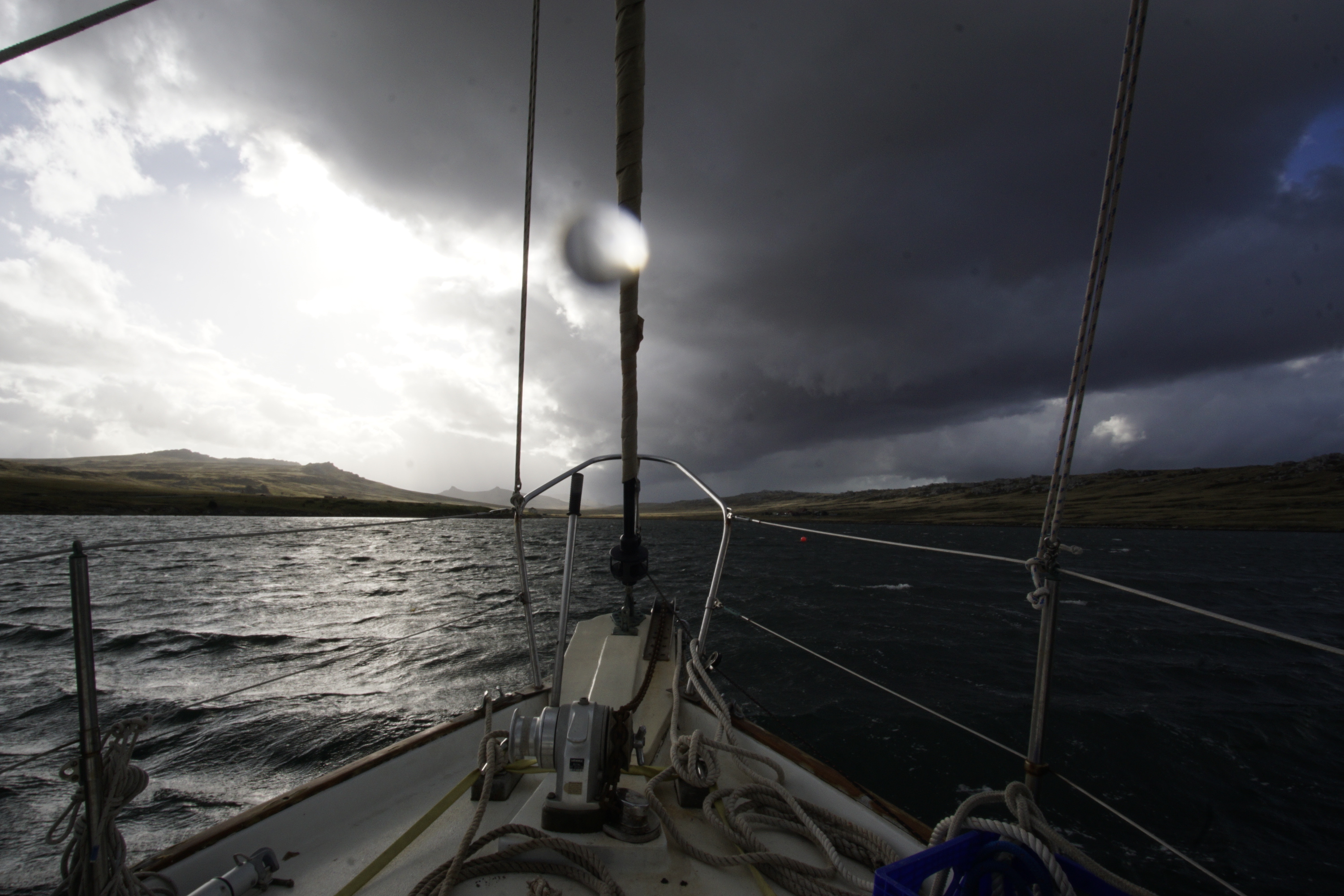
An approaching squall at anchor in Moody Brook, Stanley Harbor, East Falkland

When a summer storm approached us in the Falkland Islands, 300 miles east of Cape Horn, Brian and I took stock of the ground tackle aboard our Allied Seawind 30. We deployed three of our four anchors. As the wind backed Brian managed the anchor rodes until they were all tensioned and holding Dawn Treader in position against sustained winds over 60 knots. Our largest anchor lay straight ahead and two others flanked it, 30 degrees to port and starboard.We stood at the port-lights eating popcorn, watching dense clouds of spray fly by and listening to the wind hiss as it hit the water, like bacon in a hot pan.  

Using three anchors in Watt Cove, East Falkland
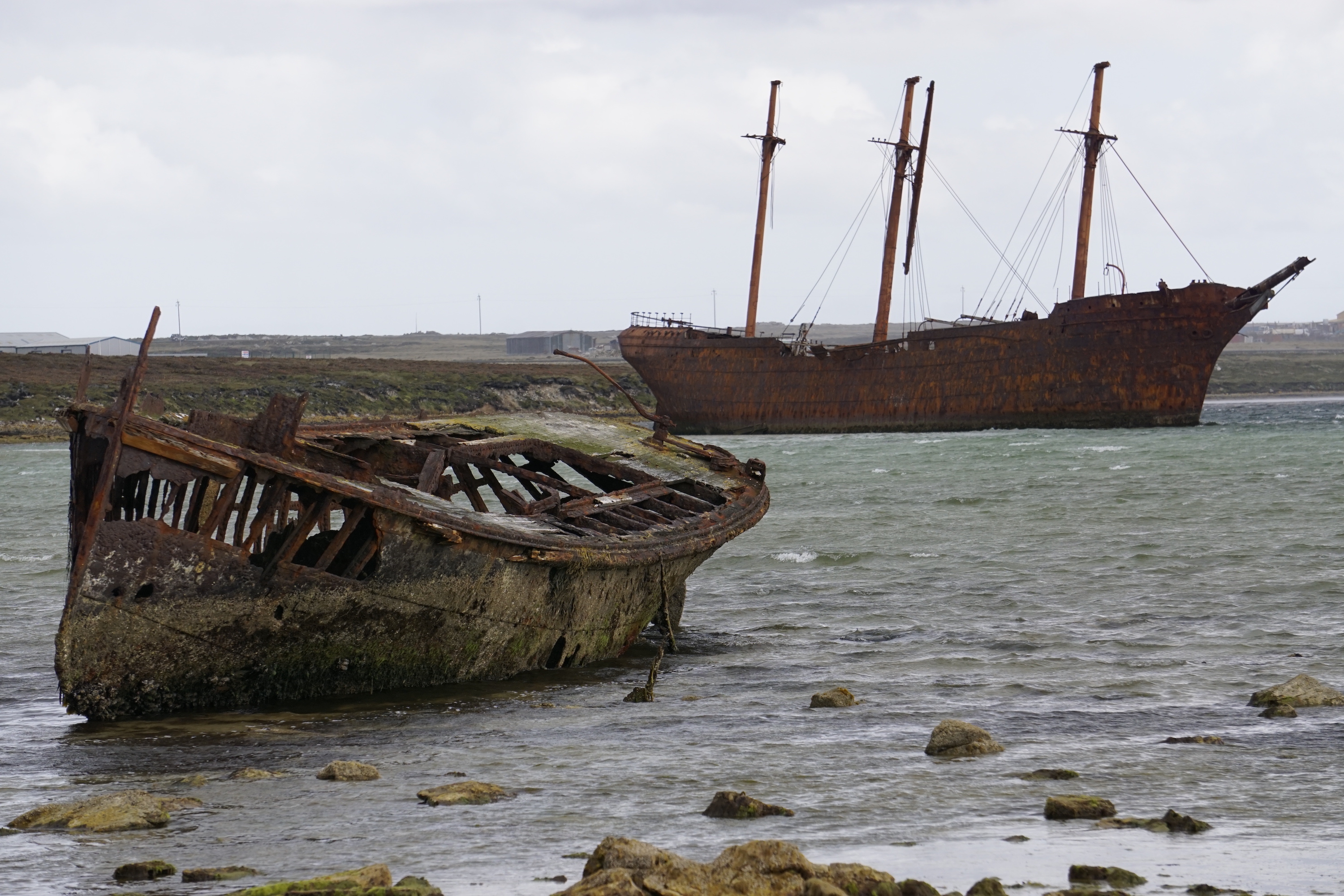
The Plym (foreground) and The Lady Elizabeth, two of The Falkland Islands’ many shipwrecks, were blown into Whalebone Cove in 1936 and 1945. Ground tackle is serious business in The Falkland Islands.

Later that same month, as depression after depression passed through, we searched the forecast for favorable weather to sail west. With no weather window in sight, we eventually chose to sail upwind in a force seven. We hardened the sheets, heeled Dawn Treader to new limits, and tacked 150 miles against the near gale. As we punched through steep seas, the bow plunged heavily with each wave. 

Although we had stowed much of our ground tackle low and amidships in preparation, the bow still carried an anchor and chain, or 200 pounds, for the coastwise trip. The laden bow amplified our boat’s motion in the waves and caused her to hobby-horse and lose drive. Nevertheless, we bashed on. It felt like the bow was hitting solid blocks instead of waves. We heard our forward toe rail crack and lost part of it to the sea. 

The anchor conundrum grabs our attention in extreme conditions like these, but the problem also exists in-between extremes. Most cruising boats need heavy holding power, and most boats sail best without extra weight on the bow, especially upwind. 

How much weight on the bow is too much? It is difficult to know where the line is, to know what exact weight creates problems. Instead of dwelling on a question that we cannot answer, we ask: how much weight can we remove from the bow? This question guides our search for better anchor stowage. Our search started well before our trip to the Falkland Islands and continues today.

In 2015 we built a below deck anchor locker while alongside a dock in southeast Georgia. We converted the center walkway notch in Dawn Treader’s v-berth into storage. We enclosed the notch with two pieces: a 30-inch high plywood panel on the aft side and an opening hatch on the top. This created a triangular compartment underneath the bunk. With the notch gone, the bunk was flush all the way across. Although the notch had been valuable, because it made entry into the forward bunks comfortable and easy, the space was amidships and low, and perfect for storing anchors. 

The locker allowed us to carry our ideal anchor collection. It easily fit a 45-pound Mantus, a 44-pound Spade, a 33-pound Rocna, and an 11-pound Fortress. We passed these anchors in and out of the locker via the convenient overhead hatch. On deck, we used a Lofrans Manual windlass and two bow rollers to deploy and retrieve ground tackle. 
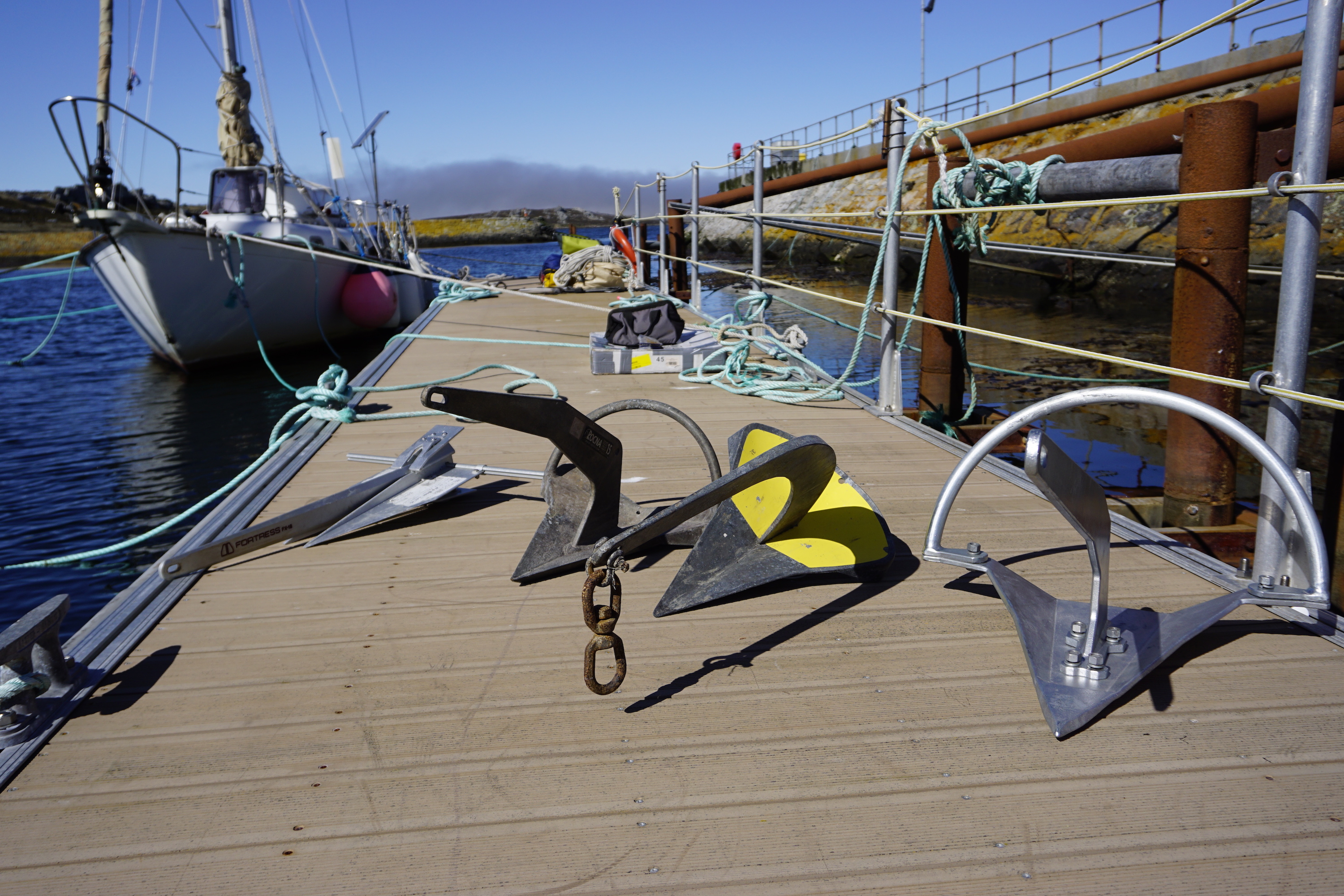
Anchor collection at the Camber in Stanley Harbor, 2019

Our anchor collection was complemented by four rodes. We carried 275 feet of chain in four lengths (150, 50, 50, and 25 feet), 3 of the four had 150 feet of nylon rode attached. We kept the longest chain in the chain locker. The two 50-foot long rodes were stowed in buckets atop the anchors in the anchor locker, and the last was typically kept attached to our Jordan Series Drogue.

In 2016 we sailed away from the east coast of the United States with our ground tackle secure in our new anchor locker. We crossed the Atlantic twice: first eastbound to the Azores, and then westbound across the equator to Brazil. From Brazil we sailed deeper south, into the Southern Ocean to the Falkland Islands. We were in those wind-swept islands in the Furious Fifties for over a year, and we put our anchor collection to work. When in doubt, put another anchor out, and we did, often. 

The anchor locker we built served its purpose, however, it also caused problems. We knew we had compromised ergonomics by converting the notch. But it was startling that such a small shift made a fundamental impact on our life aboard. As time went on, we accessed the v-berth less and less. Ultimately, we stopped living in the forward third of our boat.

The aft bulkhead of the locker was an obstacle at the end of a squat, narrow passageway into the v-berth. To reach our bunk, we hunched over, squeezed through, and climbed up—all at the same time. Once we reached the v-berth platform we spun, 180 degrees into the horizontal position. It felt like break-dancing, not the start to a restful night’s sleep. If we forgot to turn on the anchor light, the scramble out and in again was even more annoying. 

Brian climbs into the v-berth

After the Falkland Islands, we sailed to Chile and Tierra del Fuego, where it was cold and damp. Airflow was hindered by the locker as much as we were. The air in the v-berth was stagnant and cold. We began sleeping in the main cabin near the wood stove, away from the condensation and mold that formed unchecked up forward.  

For a couple of years we made the most of the otherwise uninhabitable v-berth by filling it with waterproof bags of assorted gear. We also added large produce hammocks between the fore and aft bulkheads. We had room for melons and pumpkins, and all sorts of stores. No matter how much we stored in the v-berth, however, it never made up the loss of our small boat’s living space. We were stuck in the main cabin.

In 2021 we set out to solve the problem, and others, on our growing jobs list. After months in the wilderness, sailing through the through the Straits of Magellan and north through Chilean Patagonia, we departed Chile. We sailed a 40 day nonstop passage to Mexico. We aimed for Mexico’s dry climate and a DIY friendly boatyard. Dawn Treader was situated on the hard there by the summer of 2022. Our primary goal was to prepare her for high latitude sailing. Step one: we needed to make the v-berth livable again. It was time to modify the anchor locker. 

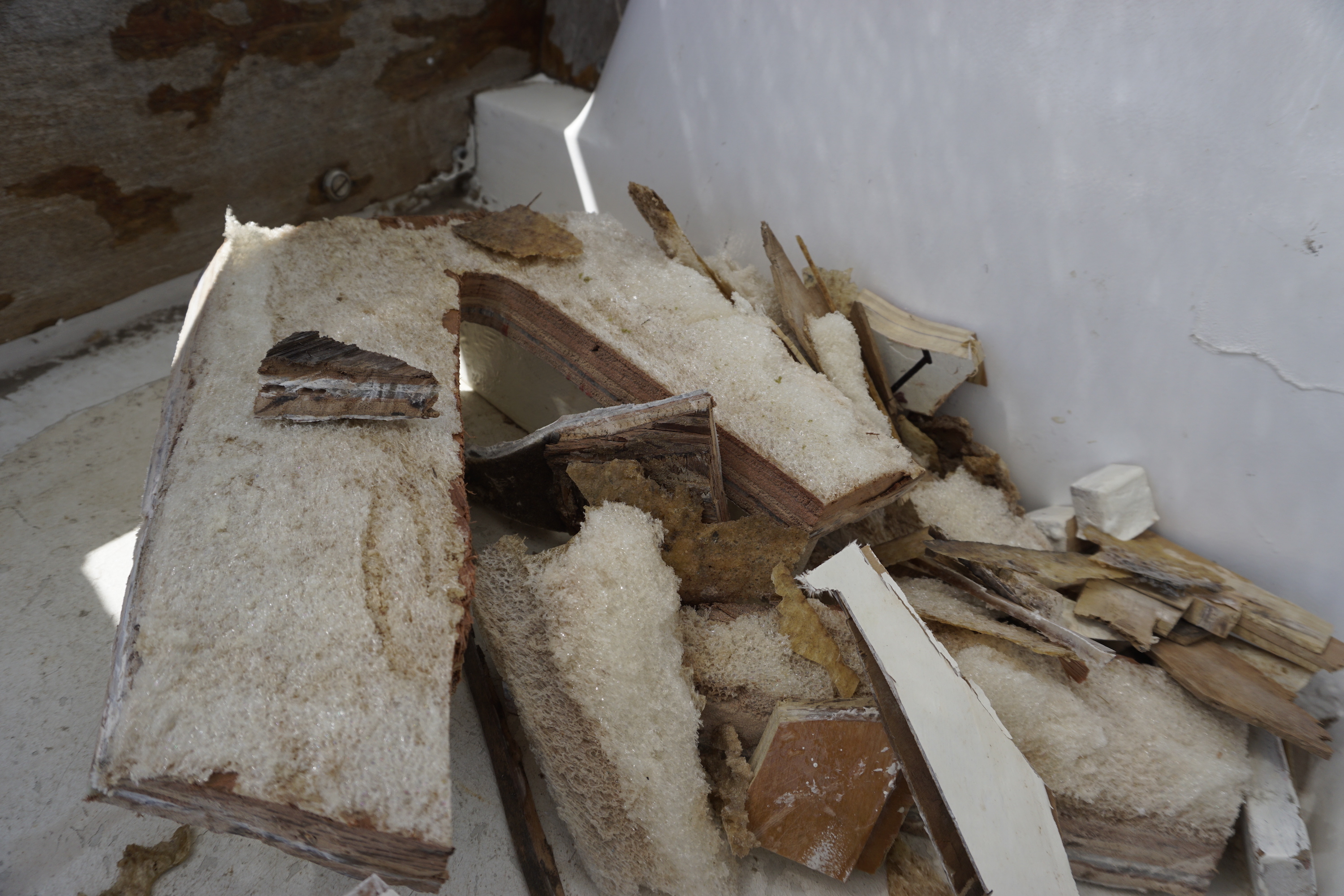
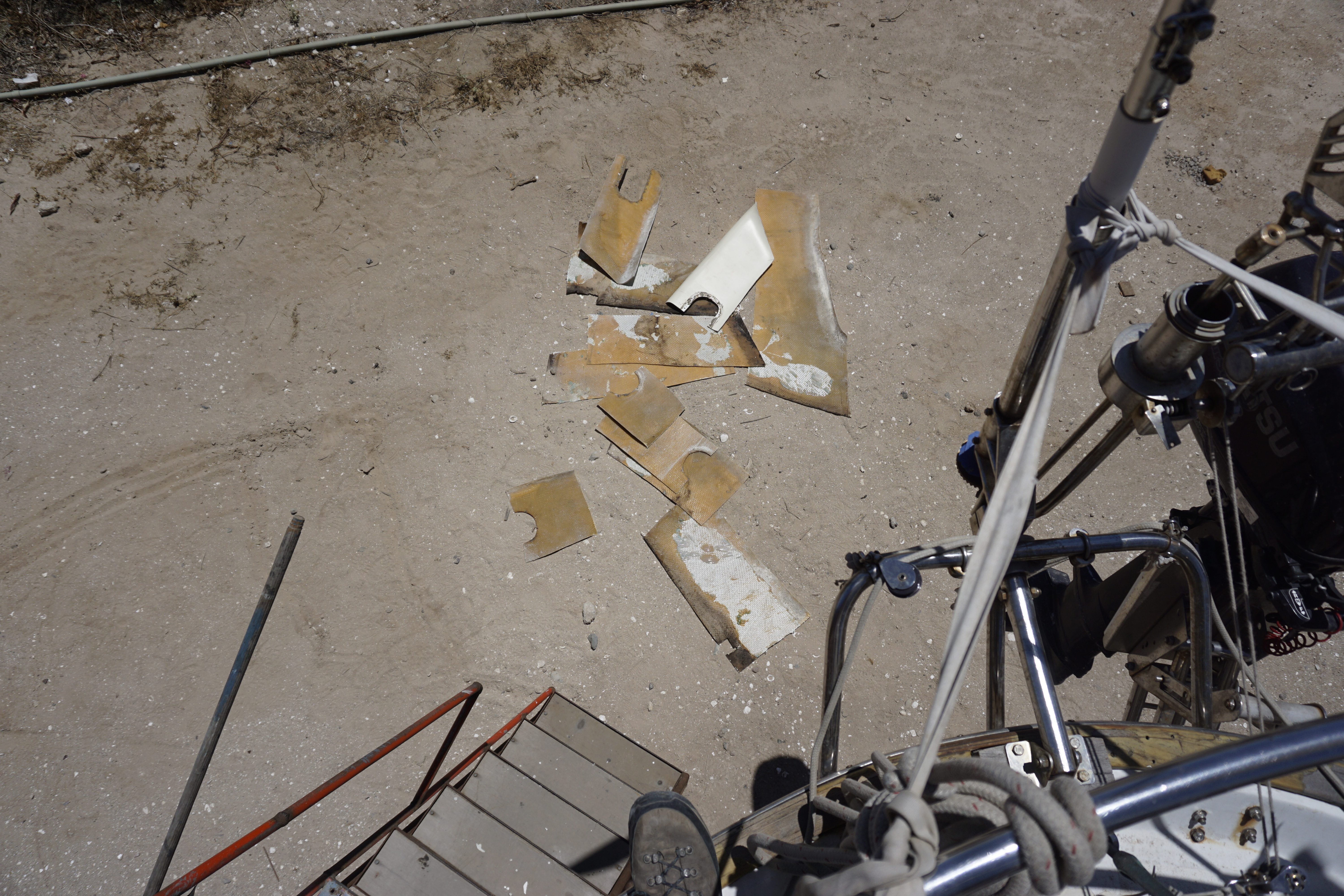
During our time in Chile, the incessant moisture had ruined the subpar plywood we had installed in 2015. We ripped out the delaminated and rotted v-berth platform and anchor locker and gathered the marine grade plywood, epoxy, fiberglass, and paint needed to rebuild.

Damaged plywood, v-berth platform removal

We planned to build a reduced height anchor locker. Our compact, nestled stack of anchors (3 of our 4 anchors disassemble) measured 20 inches high. Without buckets of extra rode on top, we could stack and stow the anchors in a locker 10 inches shorter than the first one. Overall it seemed like a good solution, but we didn’t know if the reduction was enough. A 20 inch high bulkhead was still an impediment.

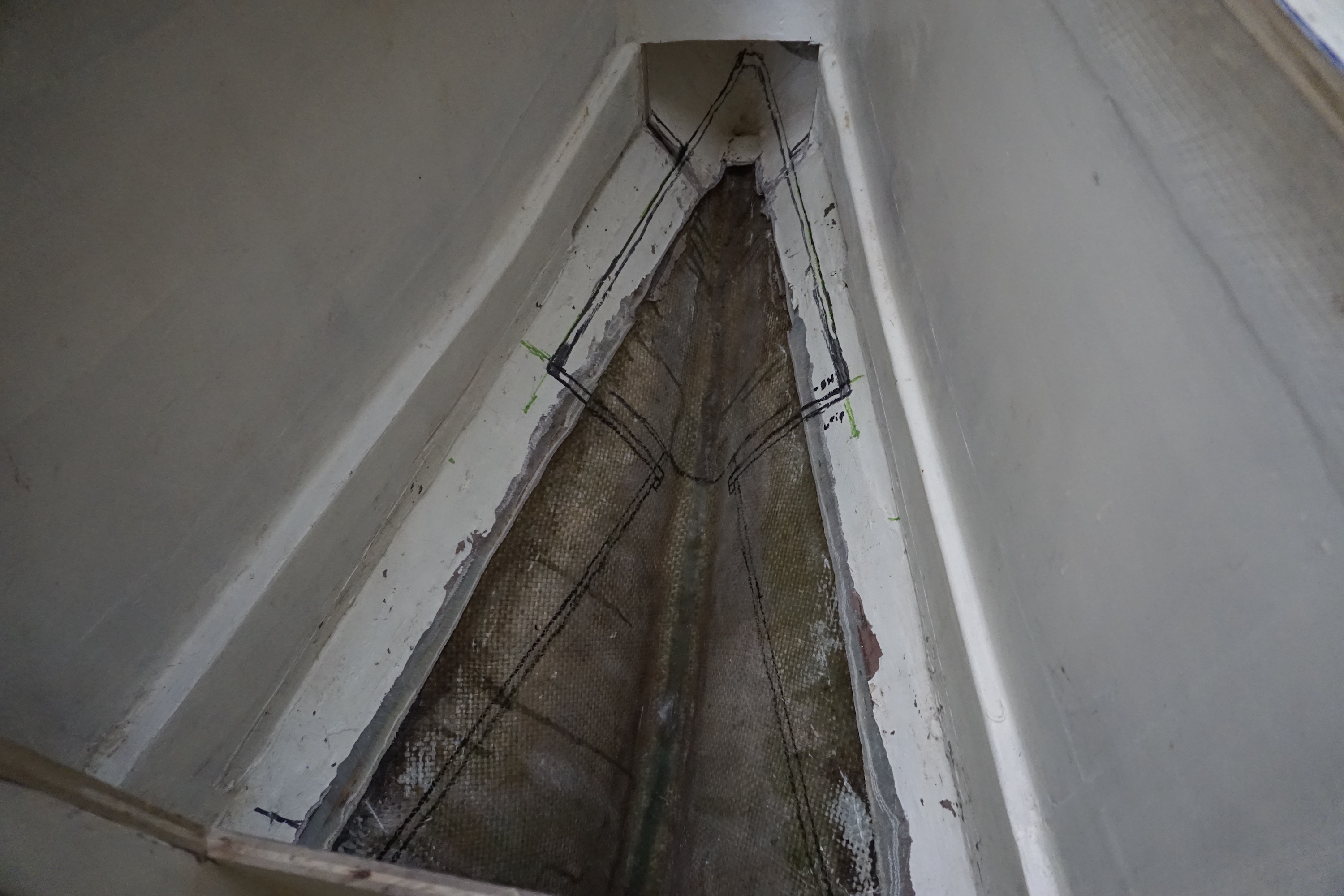
Just before we started reconstruction, Brian studied the space intently. He made a last-minute decision to cut out a section of the original plywood sole in the v-berth, in what had become the bottom of the anchor locker. He found more space for anchors under the sole, in the bilge.

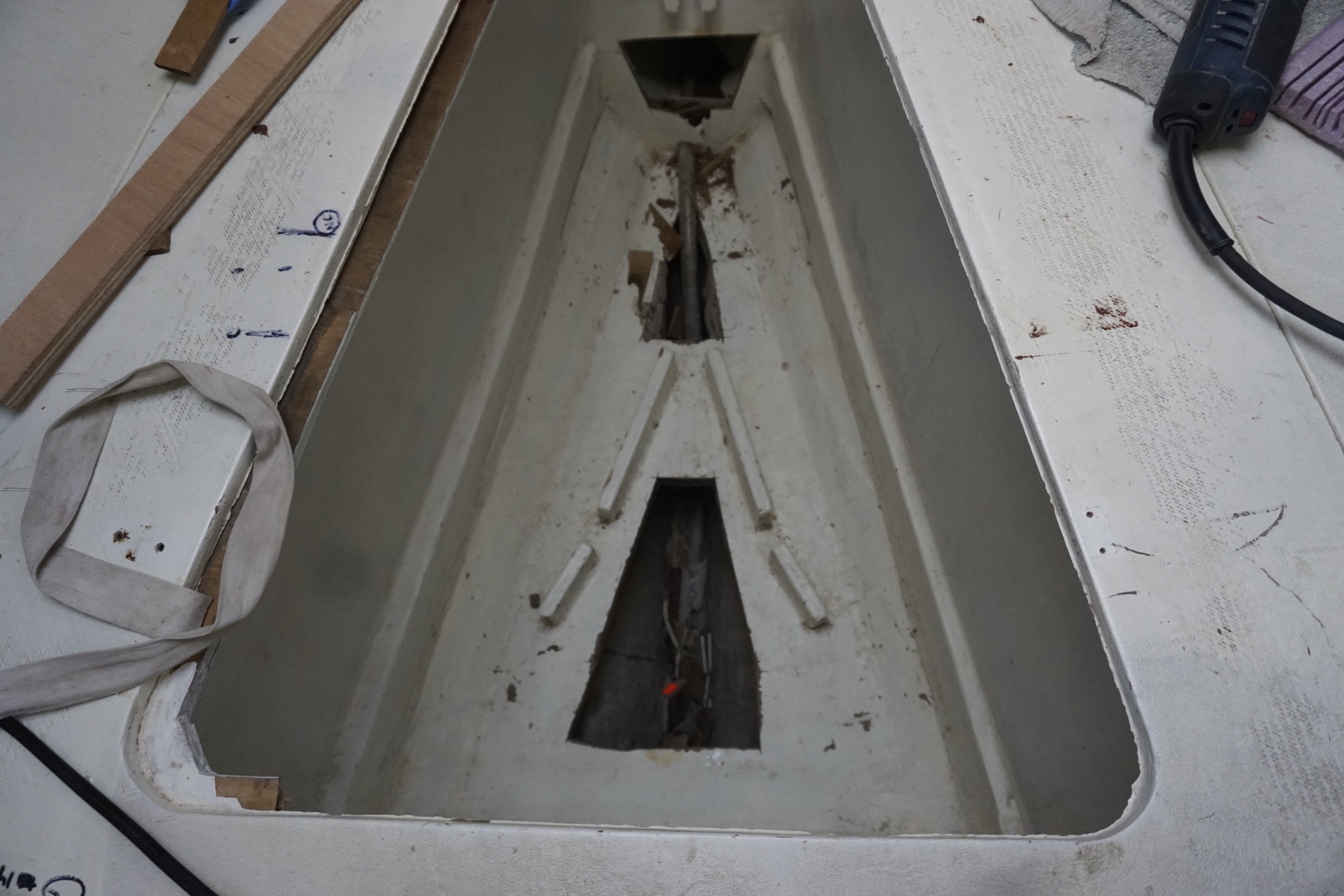
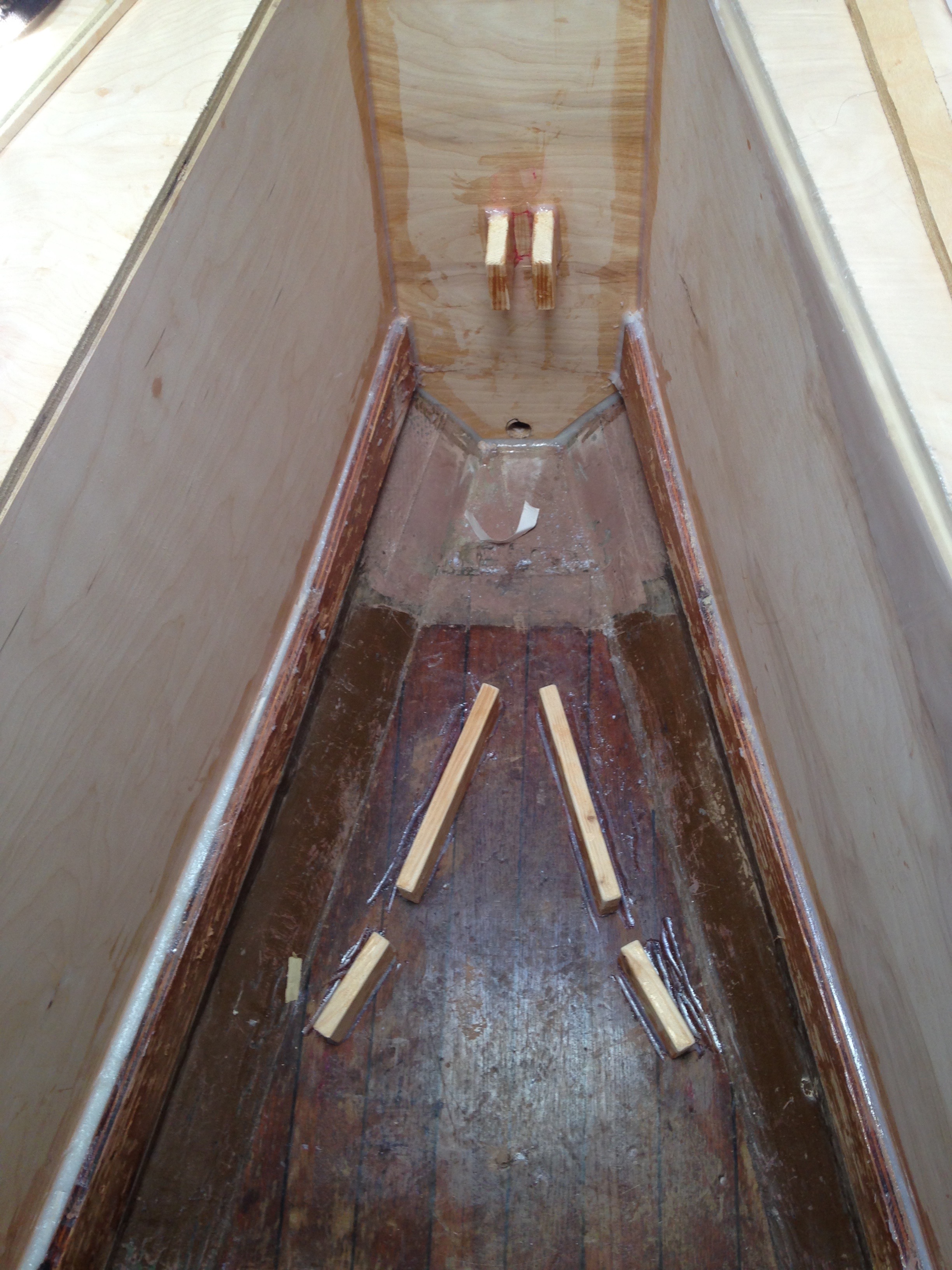
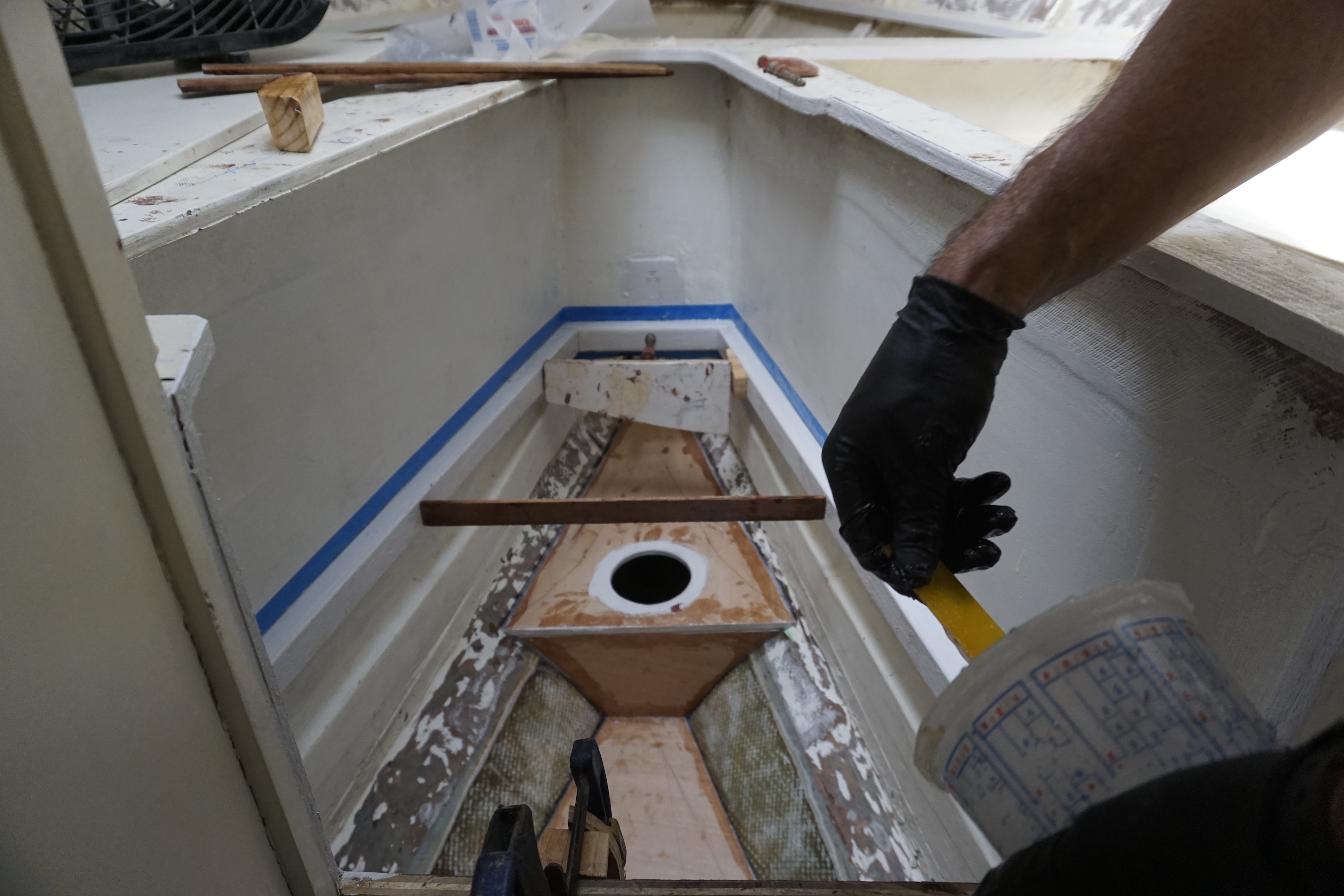
The next day we built steadily. We built the new base of the anchor locker lower by going 6 inches into the bilge. The aft bulkhead of the locker was transformed, from an obstacle into a 14 inch high step. 

Access to the v-berth improved dramatically. Now we step fluidly forward, onto the lid of the anchor locker. We also have space to swing our legs up and down, or in and out of bed—no more break-dancing. 
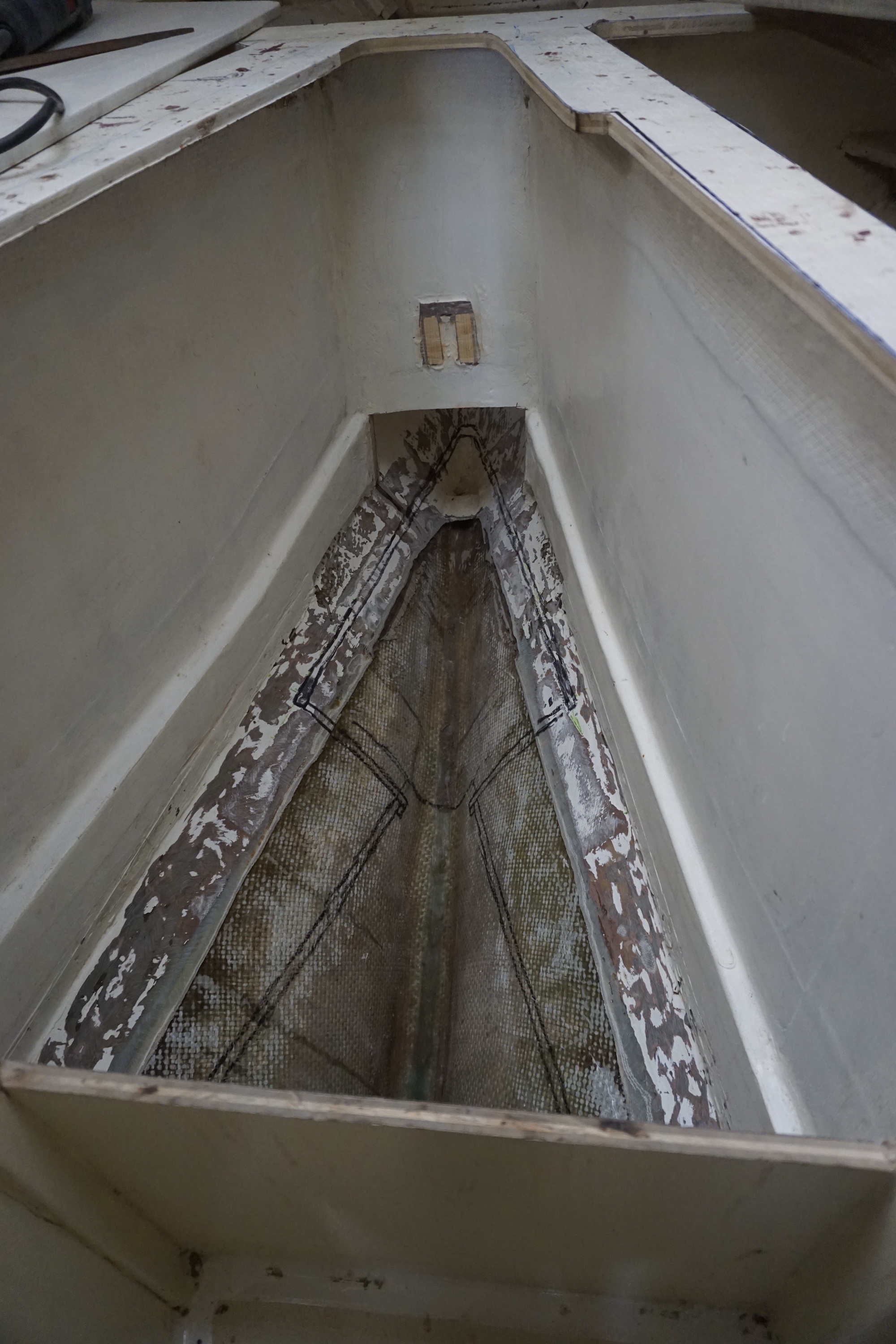
With the anchor locker complete, the weight of chain in the bow remained a nagging question. Finally, after several months of refitting the boat, we realized there was space for chain underneath the sole in the head. When practical, we can now move our heavier, primary rode into new compartments, located low and center. When we do, we plan to sail with a lighter, secondary rode in the bow locker.  
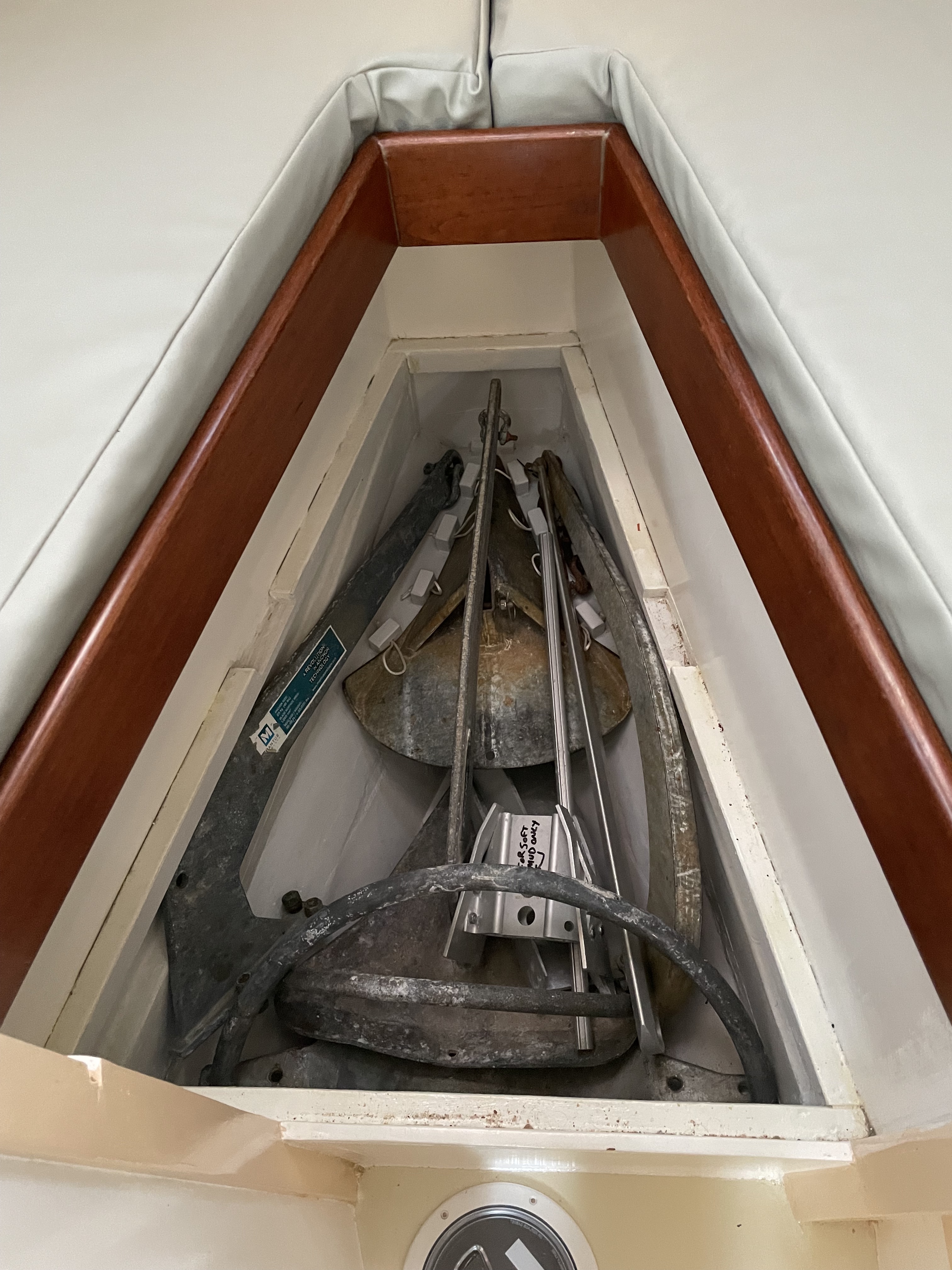
We built our first anchor locker in 2015 to solve a stowage problem. Unfortunately, the locker solved one problem and created another. We enjoyed the stowage solution and lived with its shortcomings for eight years. This time, we rebuilt to solve both problems. We preserved stowage and reclaimed access. We also got a little something extra in the refit process; we now have a new location for chain. We are counting the days until we put our solutions to the test, and the true testing ground is just a short trip in the travel lift, across the boatyard and into the sea. 
V-Berth Insulation, Part 5, Epoxied Frames

This is a large scale project. We may be in the boatyard for up to a year. We have worked on Dawn Treader for long periods before, but this time our projects seem bigger and more numerous.

Dawn Treader has been in the boatyard for 13 weeks. We have worked solidly for 9 of those weeks. The time has passed steadily. The days have stretched, allowing for long hot days of work. If our year long refit plan becomes a reality, than we should be 25% of the way through our projects. Have we completed 25% of our to do list? Hardly. But, we are optimistic that we can increase our pace.

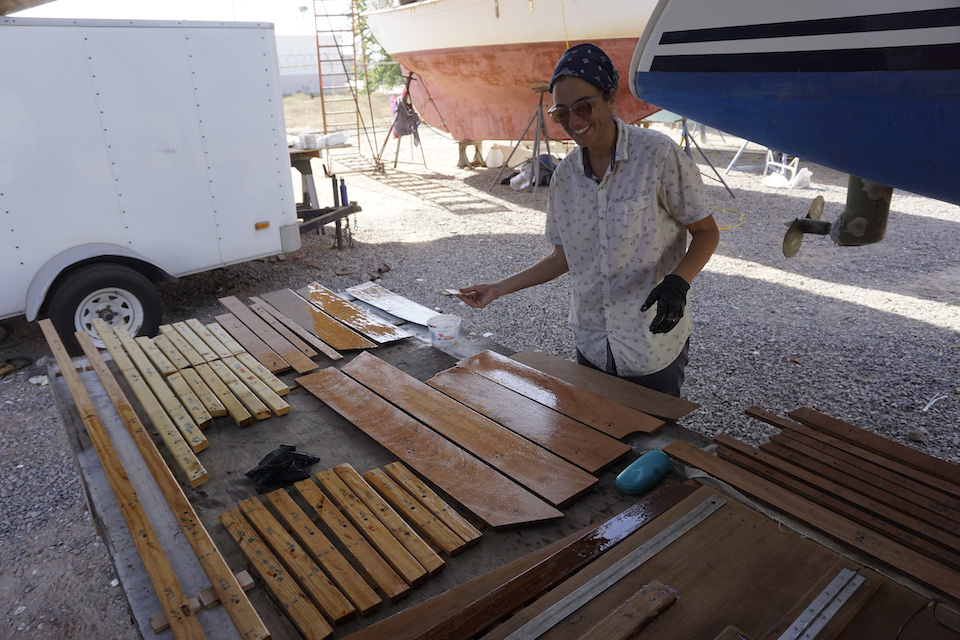
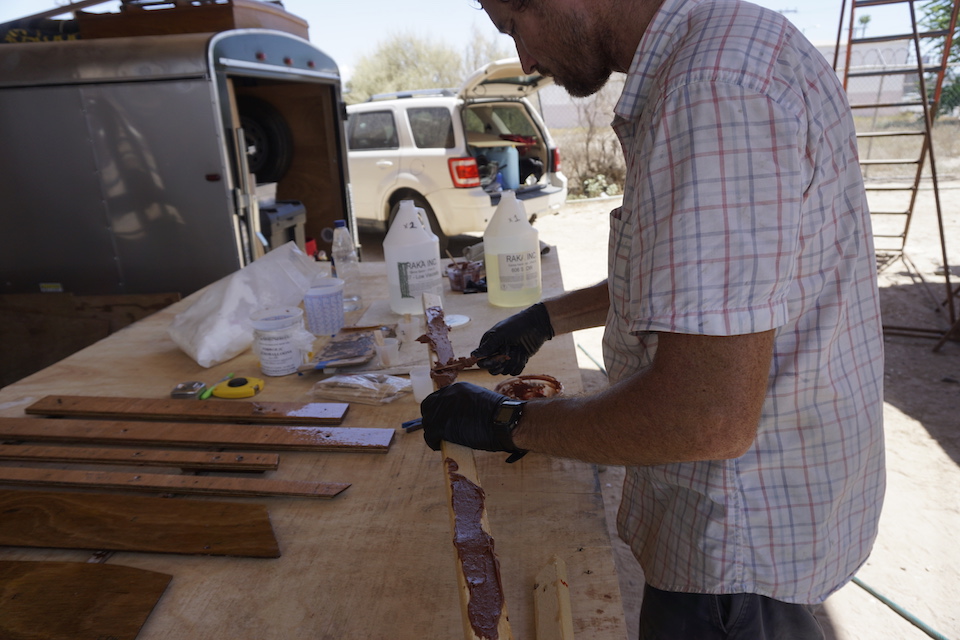
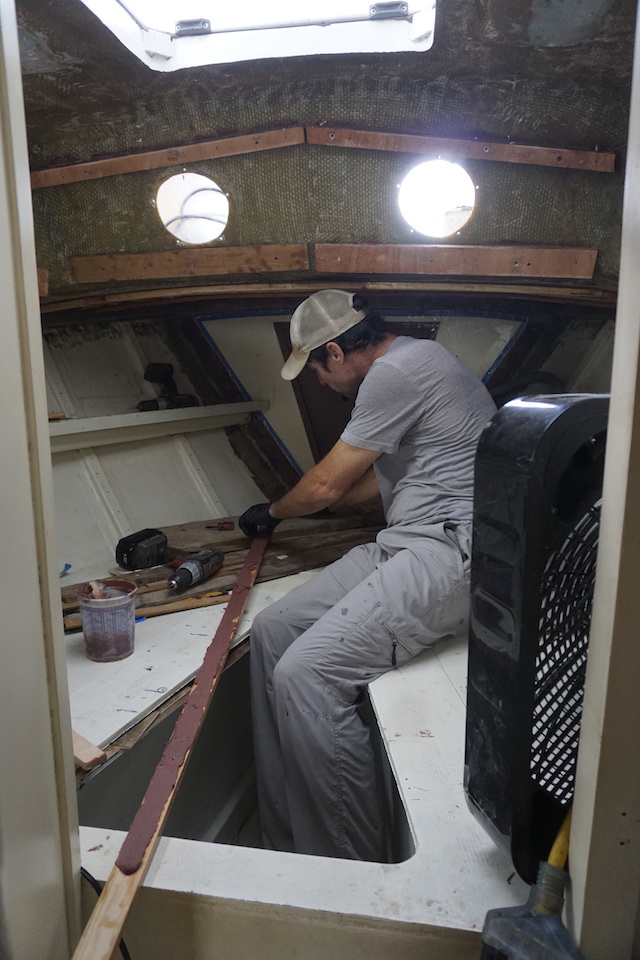
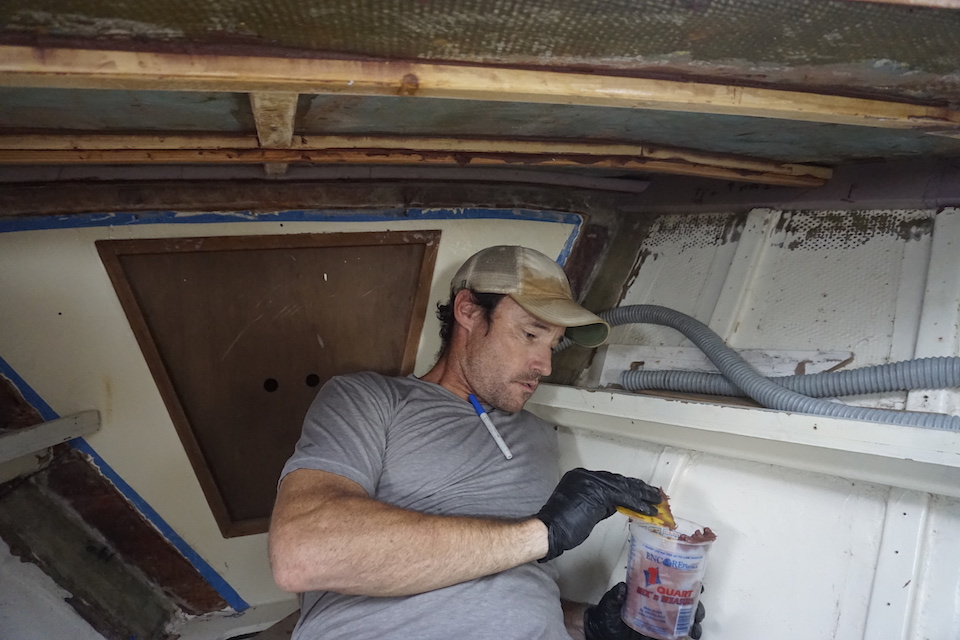
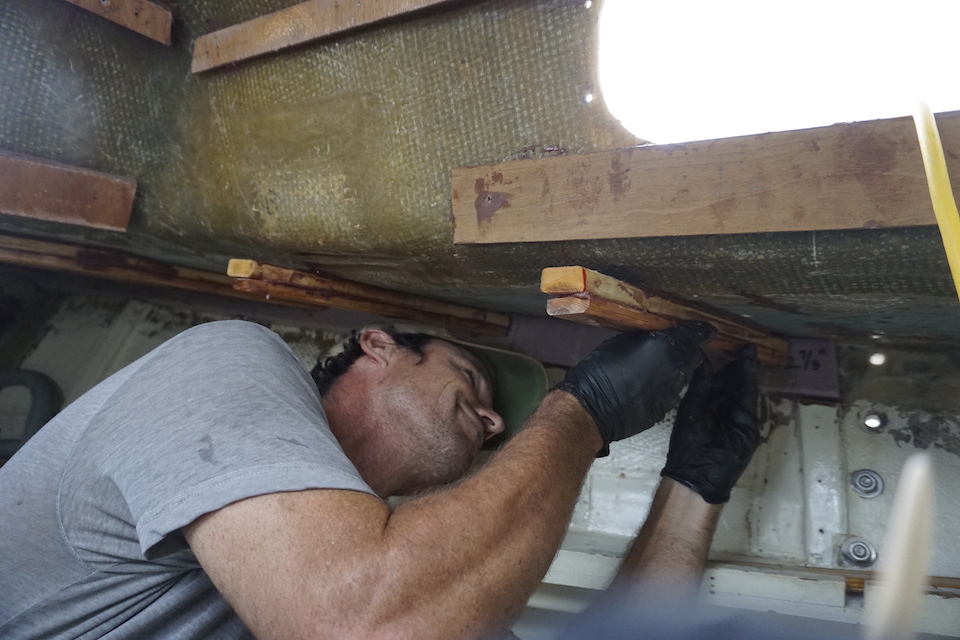
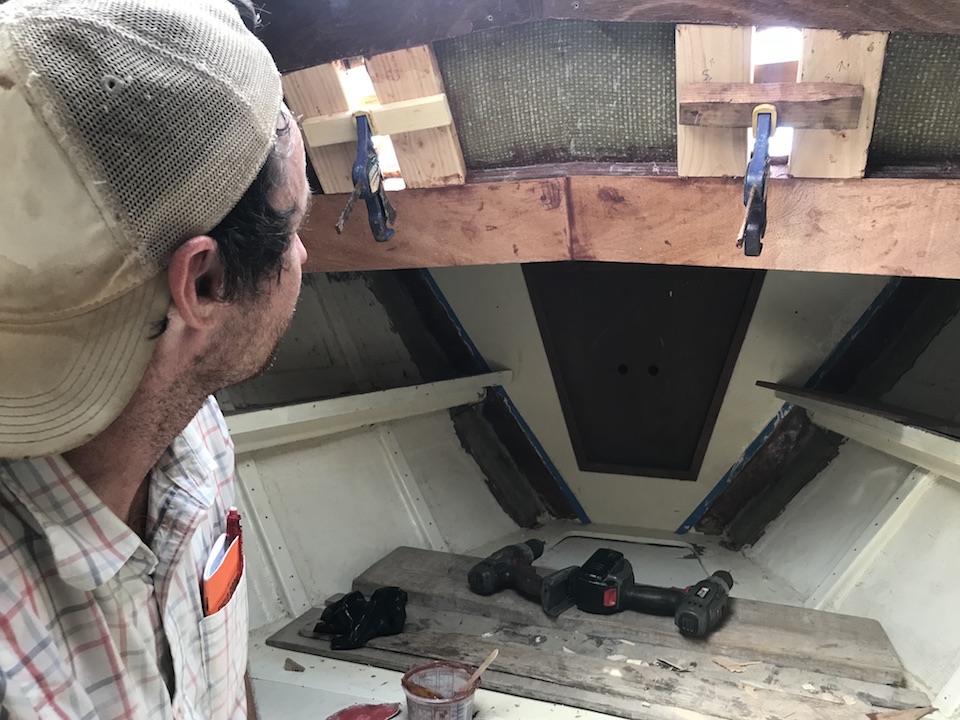
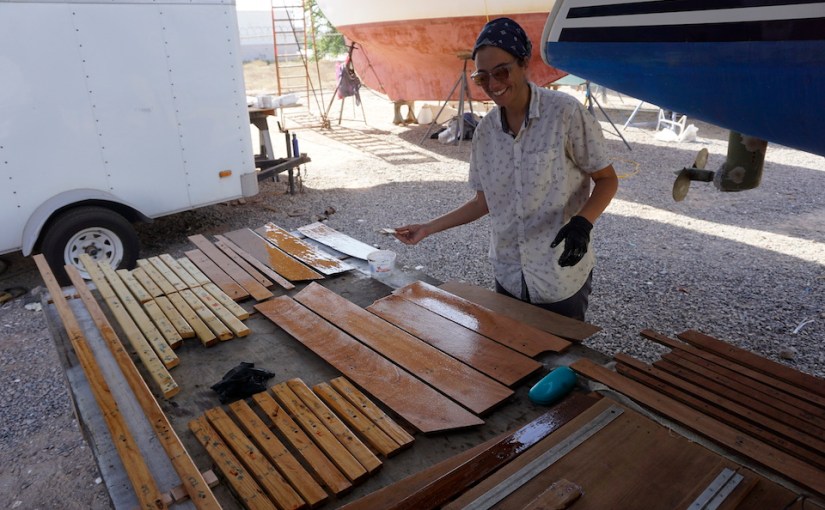
Last week, we made our first lasting addition. We used epoxy to coat the frames for the overhead in the V-Berth, and then used thickened epoxy to attach the wood pieces to Dawn Treader. The framework is strongly fixed in place. We cannot move the frames, even if we push and pull with all of our force. With the framework overhead, Dawn Treader feels like a tank, an armored or reinforced vehicle ready for combat. 

The framework is strong, but it is also as light as we could manage. Where there are larger panels, there are smaller cleats or foam hiding underneath. Light furring strips act as spacers for stronger heavier douglas fir. The plywood is either 3/16 inch thick teak or lightweight 1/2 inch okoume.

With the frames in place, we have sufficient room to add an inch of insulation overhead. Although we are not finished working on the frames, they want a bit of epoxy, some sanding, and a coat of paint, they are ready to act as supports. We will cut and dry fit a new overhead liner, 1/4 inch okoume plywood panels, to the frames in our next steps. 

Project Notes

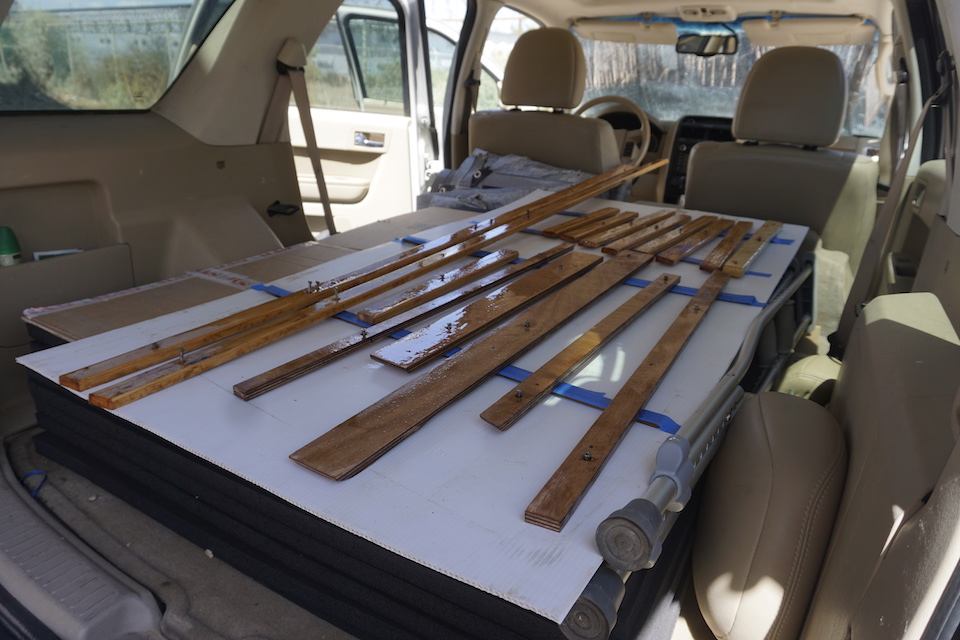
We removed all the frames and coated them with epoxy. We made a mistake when mixing one of the pots of epoxy. We mixed Part A with Part A instead of A with B. The sticky pieces coated with this pot of epoxy had to be scraped and sanded, and then coated again. We continue to make mistakes. It is hot, our heads are muddled, and we still feel rusty when it comes to boat work.

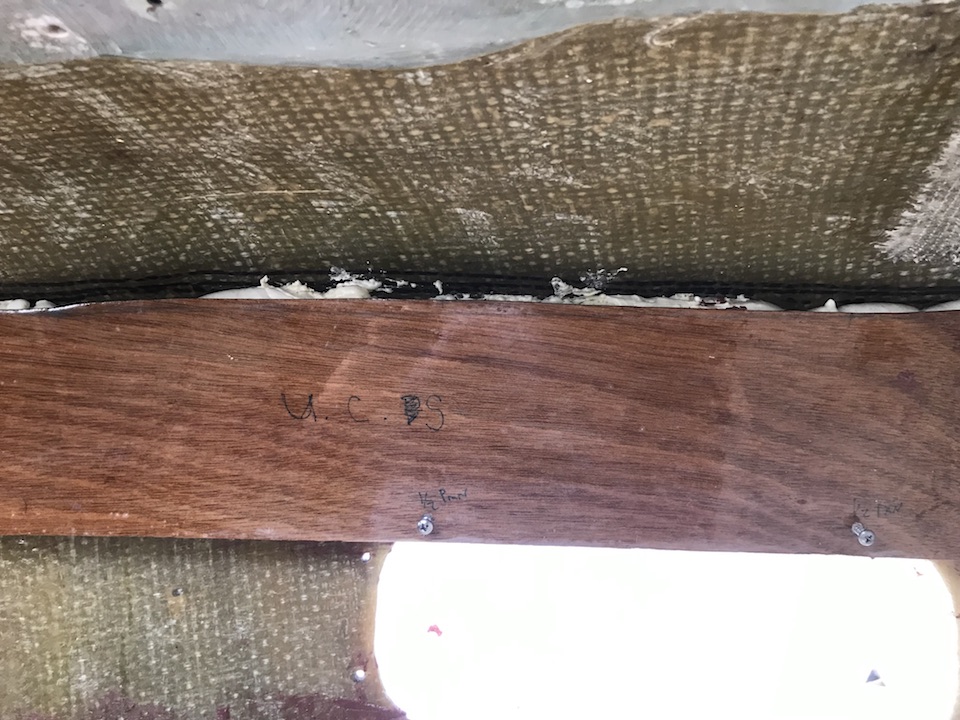
We added thickened epoxy to each piece and glued them to the overhead. Screws and clamps held each piece in place until the epoxy set. Layers were laminated together and we were almost done. But, the awkward curved space on the upper cabin sides called for a more times consuming, unique approach. This is the only place where plywood will be fixed over a small volume of space, a space that we will not be able to access and insulate later. To insulate this gap, we used XPS foam and spray foam. We then epoxied 3/16 inch plywood atop the cleat that bordered the foam at its lower limit. 

Unfortunately, the polyurethane spray foam grew and pushed the tops of the plywood pieces out of place. Having never used the foam before, we thought it would expand and flow out of the gaps at the top of the plywood. Instead it expanded more uniformly, and its growth displaced the plywood. Brian made the quick decision to take the panels down before the epoxy set. The next day, he trimmed the foam, we sanded down the epoxy, and then we successfully installed this third layer, the second time around. 

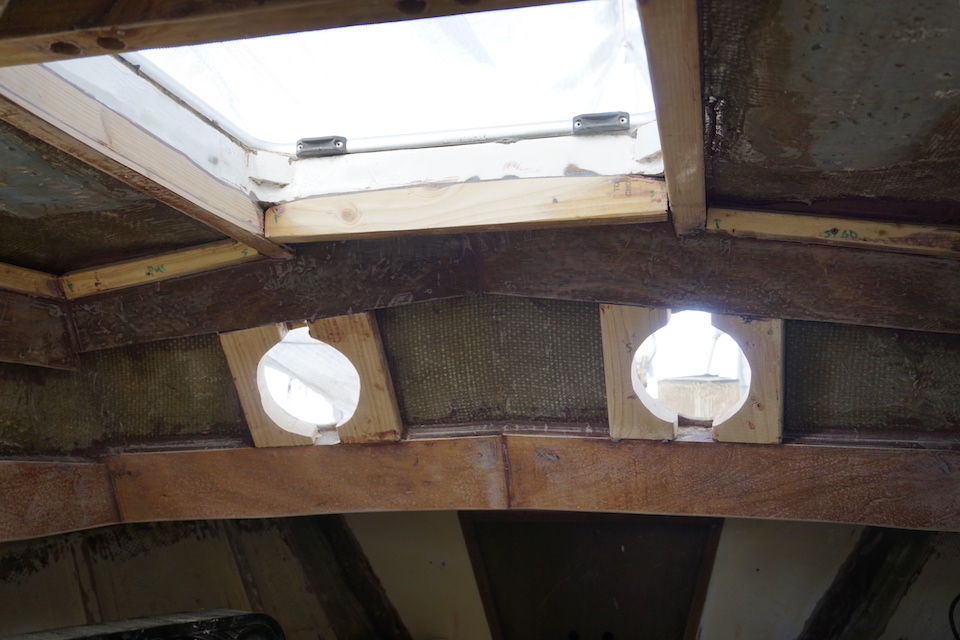
We added frames to the tricky area, the overhead around the hatch, last. We used douglas fir around the hatch and installed easy to shape furring strips for six other frames: three to port, three to starboard. All of these pieces were installed to create an even support system for the new headliner panels. The frames were made into variable shapes to absorb the irregular surface of the overhead, so that the plywood can be placed overtop in a single plane. 

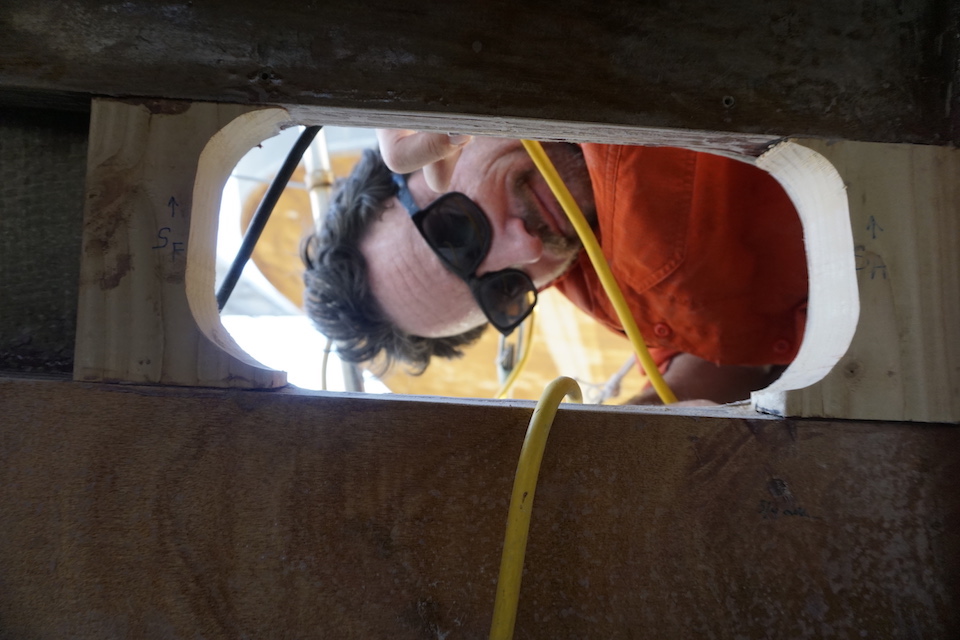
We also added wood around the port lights, to completely border them with wood. Brian then cut the blocks to shape using a jigsaw. Next, we will sand and epoxy the port light frames. We will do some finish work on all the frames: epoxy filler, sanding, and painting. But for now, we are going to move on to the next step in the project.

V-Berth Insulation, Part 2, Headliner Removal and Surface Prep

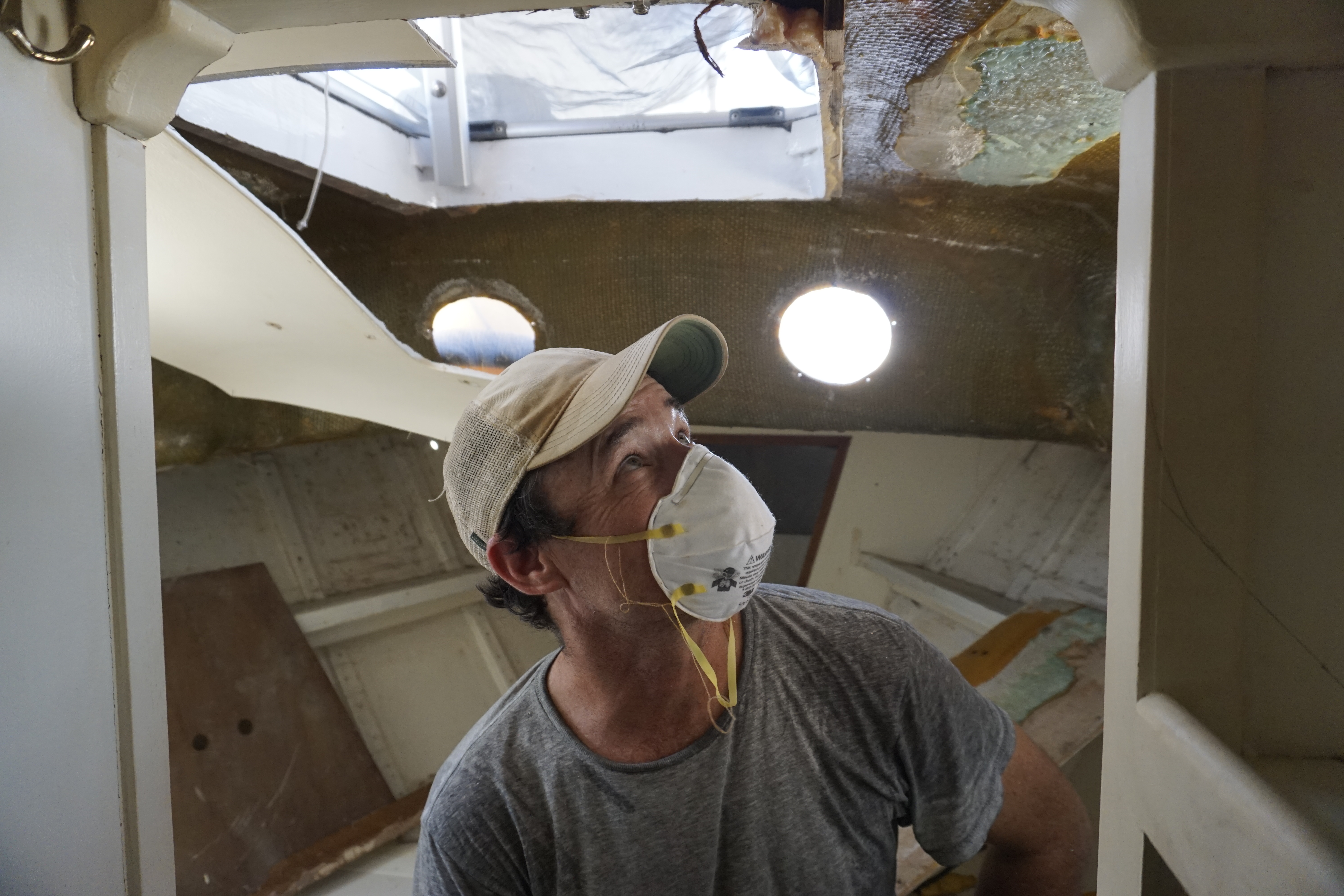
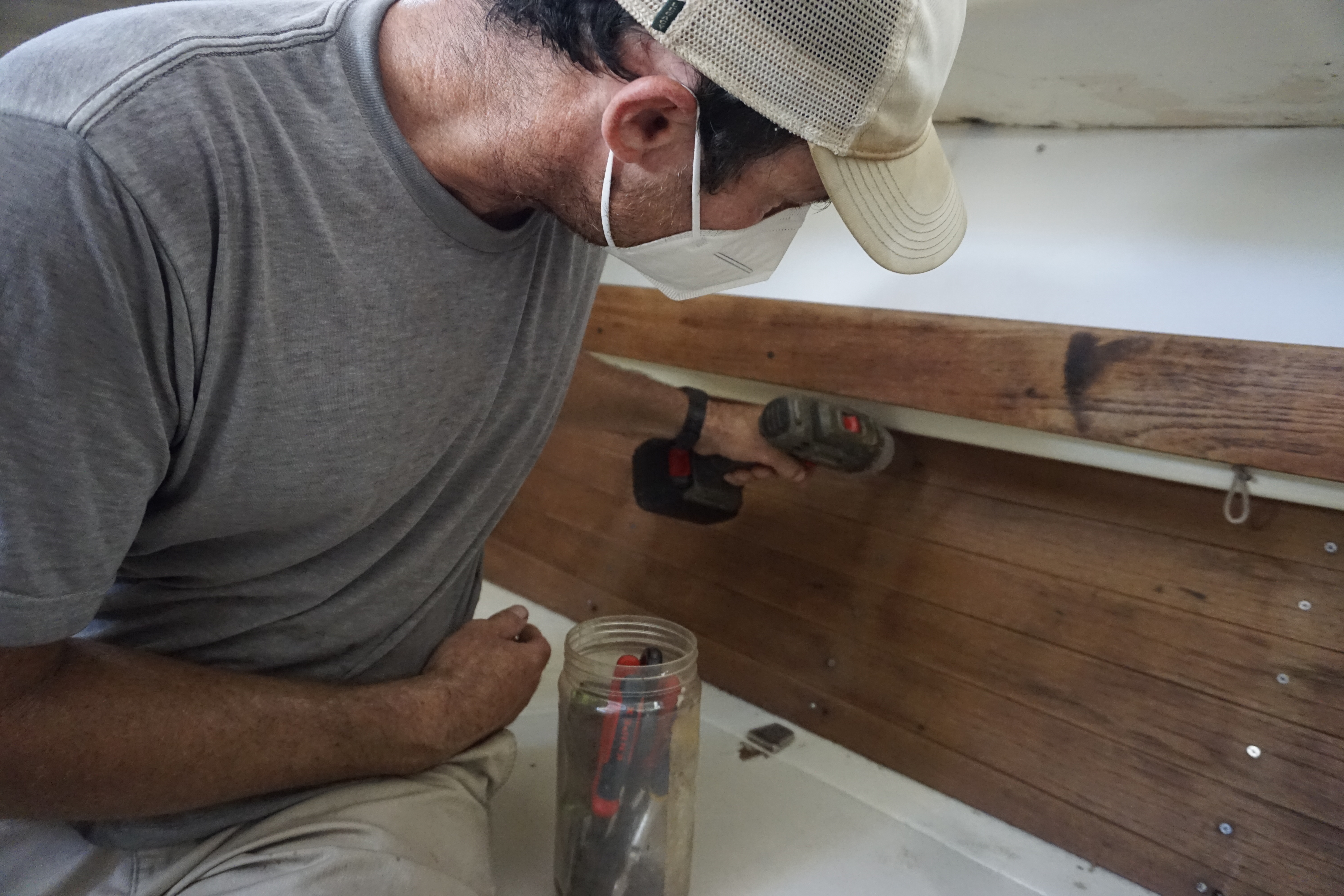
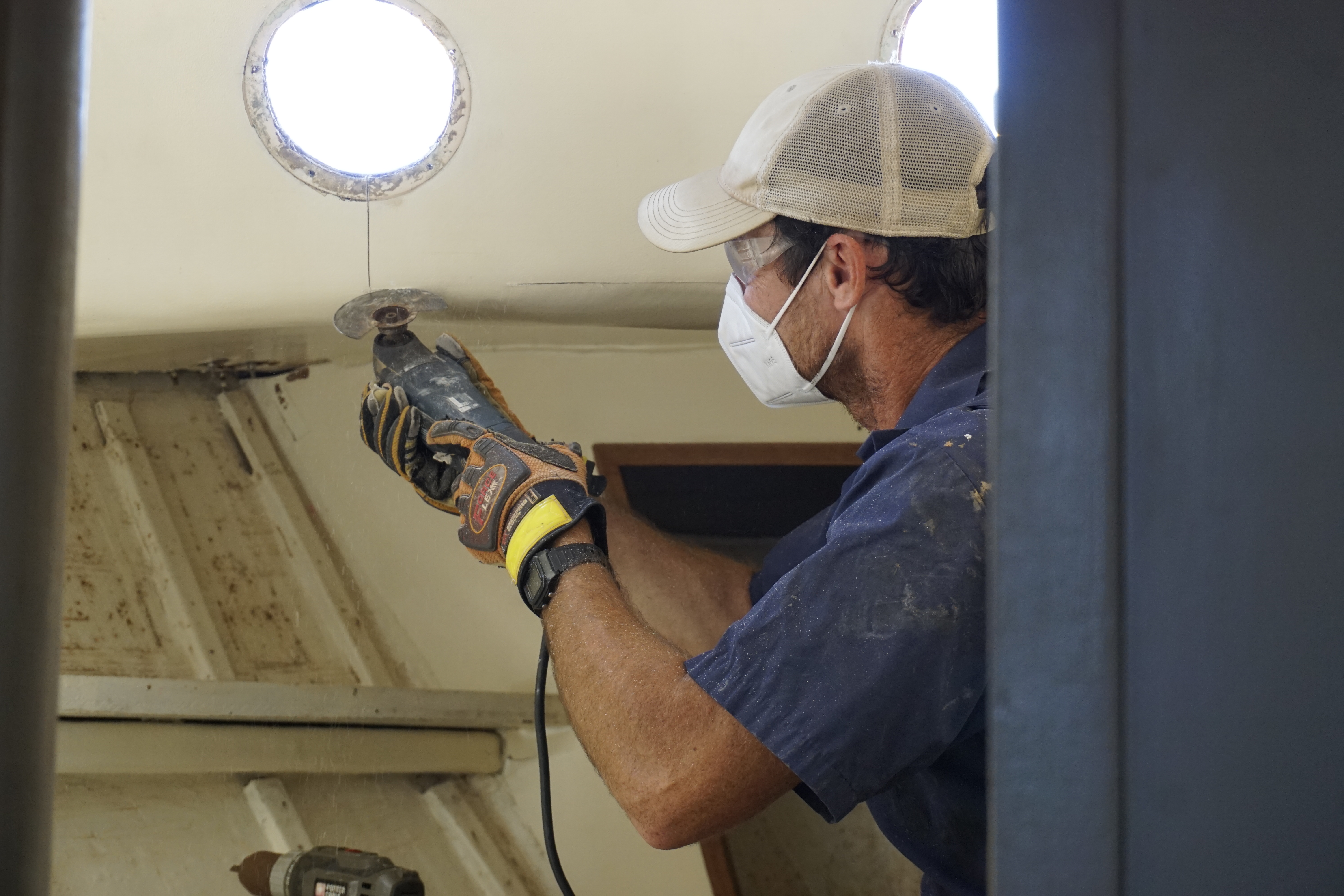
Brian finished the headliner removal this week. First, we unfastened a couple of stanchions, handrail bolts, and trim that were in the way. Next, Brian used a chisel, a multi-max, and some muscle to pull out the remaining sections of the headliner. Some pieces were tabbed to bulkheads with narrow fiberglass tape. These were more difficult to remove, but he got the job done quickly.  

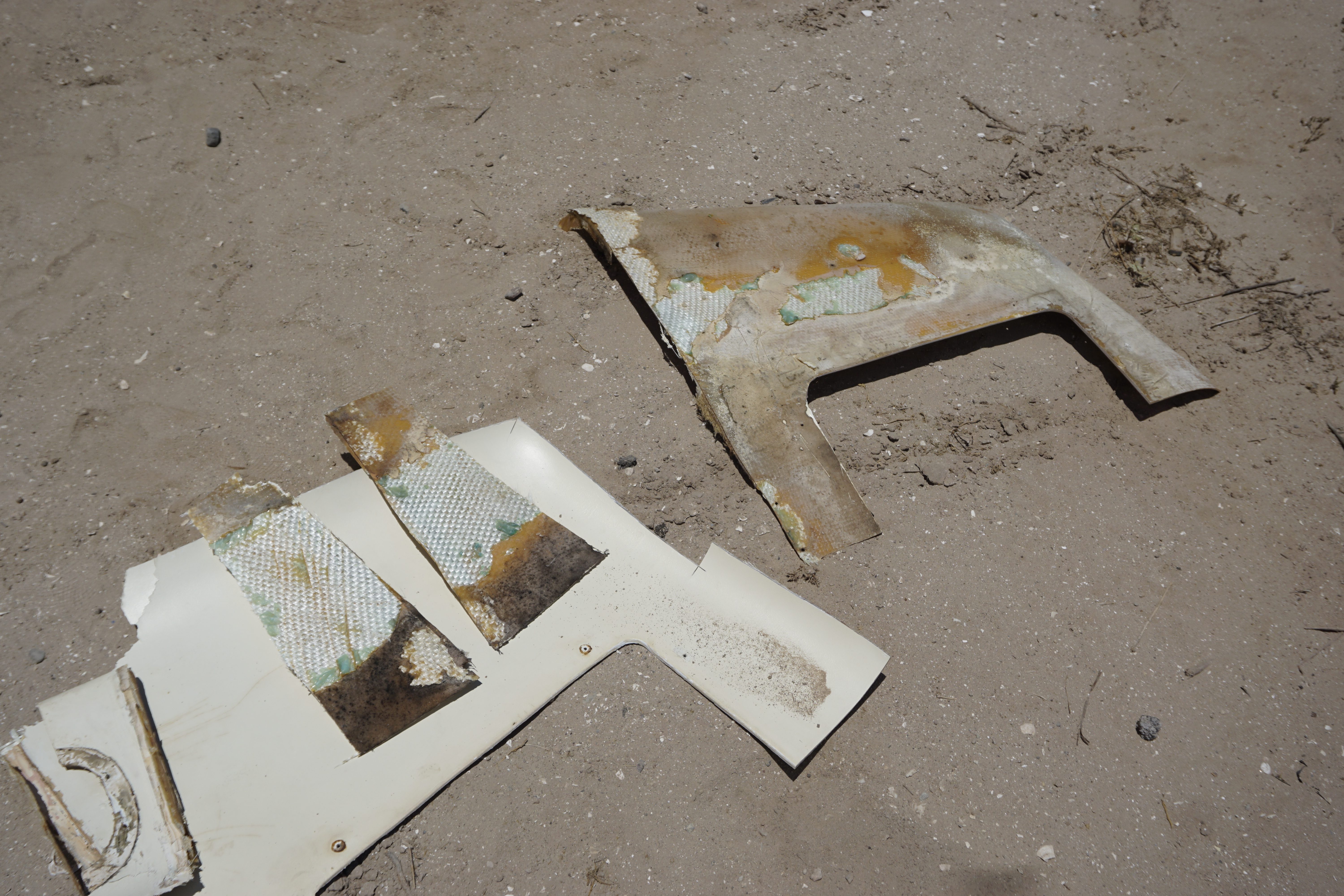
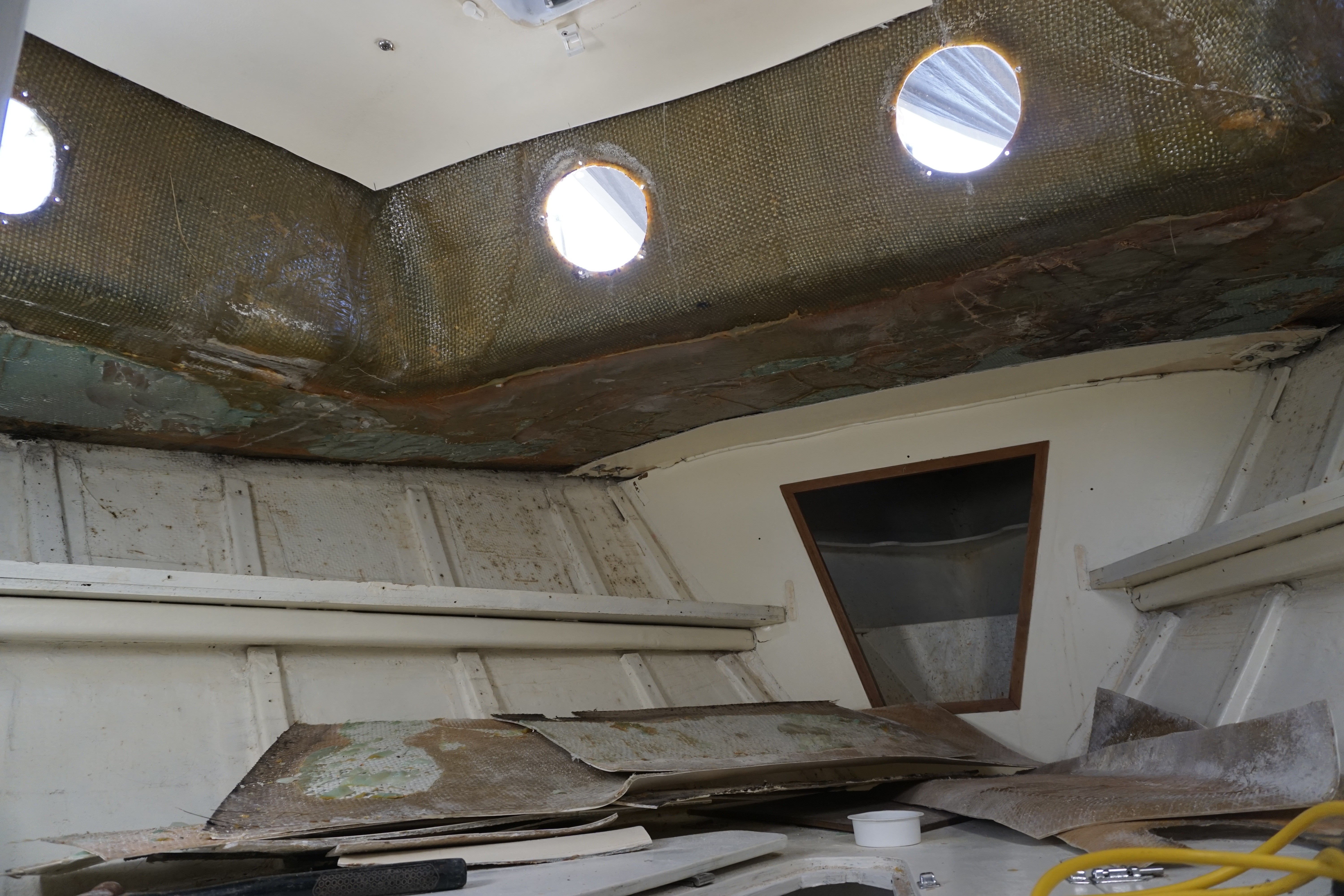
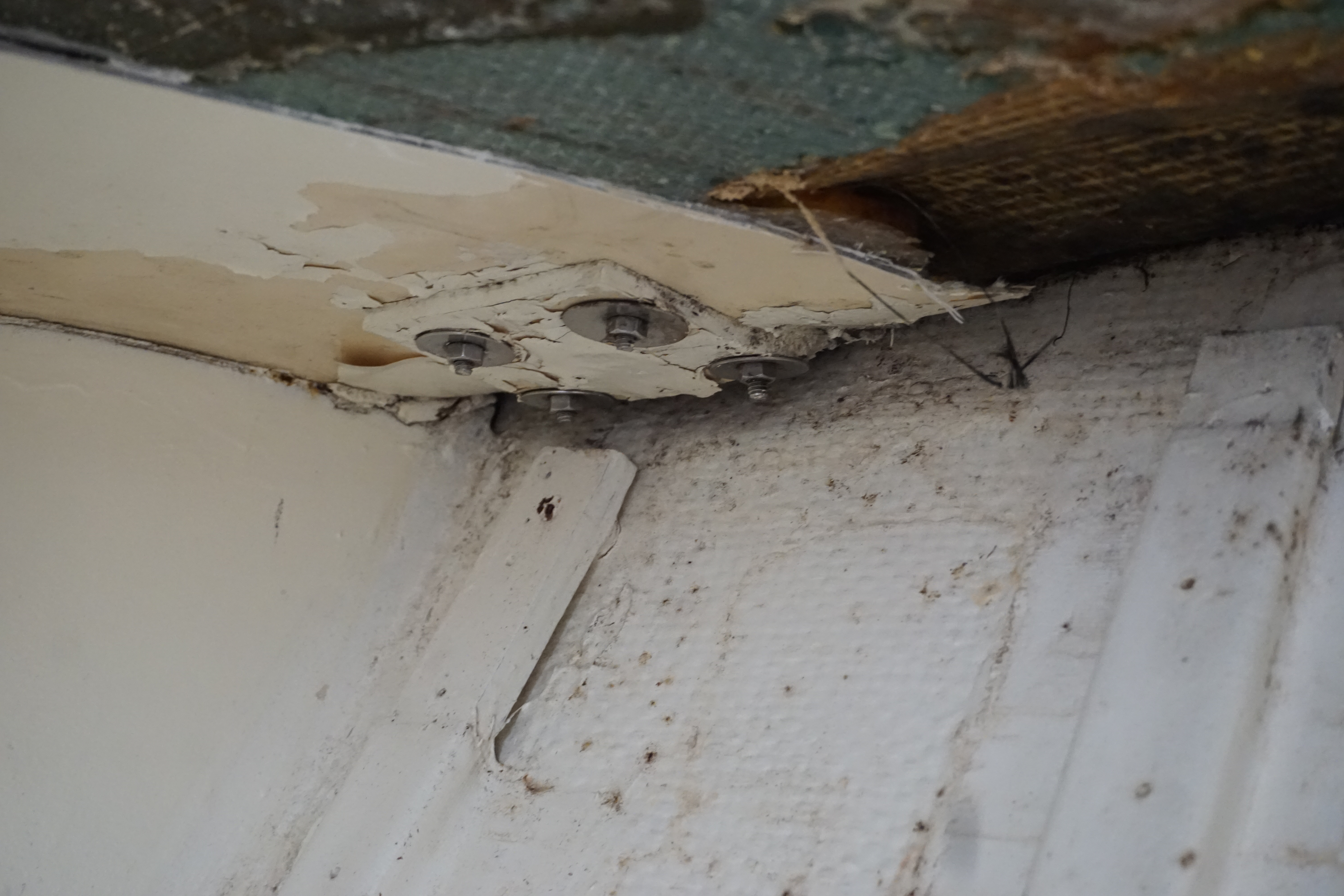
The next step was surface preparation. The resin used to adhere the headliner was applied in large blobs. These blobs are now brittle and sharp around the edges. They stand out in green because the weave of the headliner remained attached to them. Removing the headliner unearthed a variable surface; resin in peaks and valleys, bare spots where the deck core almost peeks through. 

Leveling this surface completely is difficult and unnecessary. But Brian has used the variable speed angle grinder to smooth over the area. We are left with a more undulating and friendly surface to work with. In the coming weeks, we will attach a support framework or webbing to this imperfect, but improved surface. The webbing will support the deck from below. It will also create a network or grid of material that stands out from the overhead. Insulation will go in between the grid, and cover panels will mount to the grid.

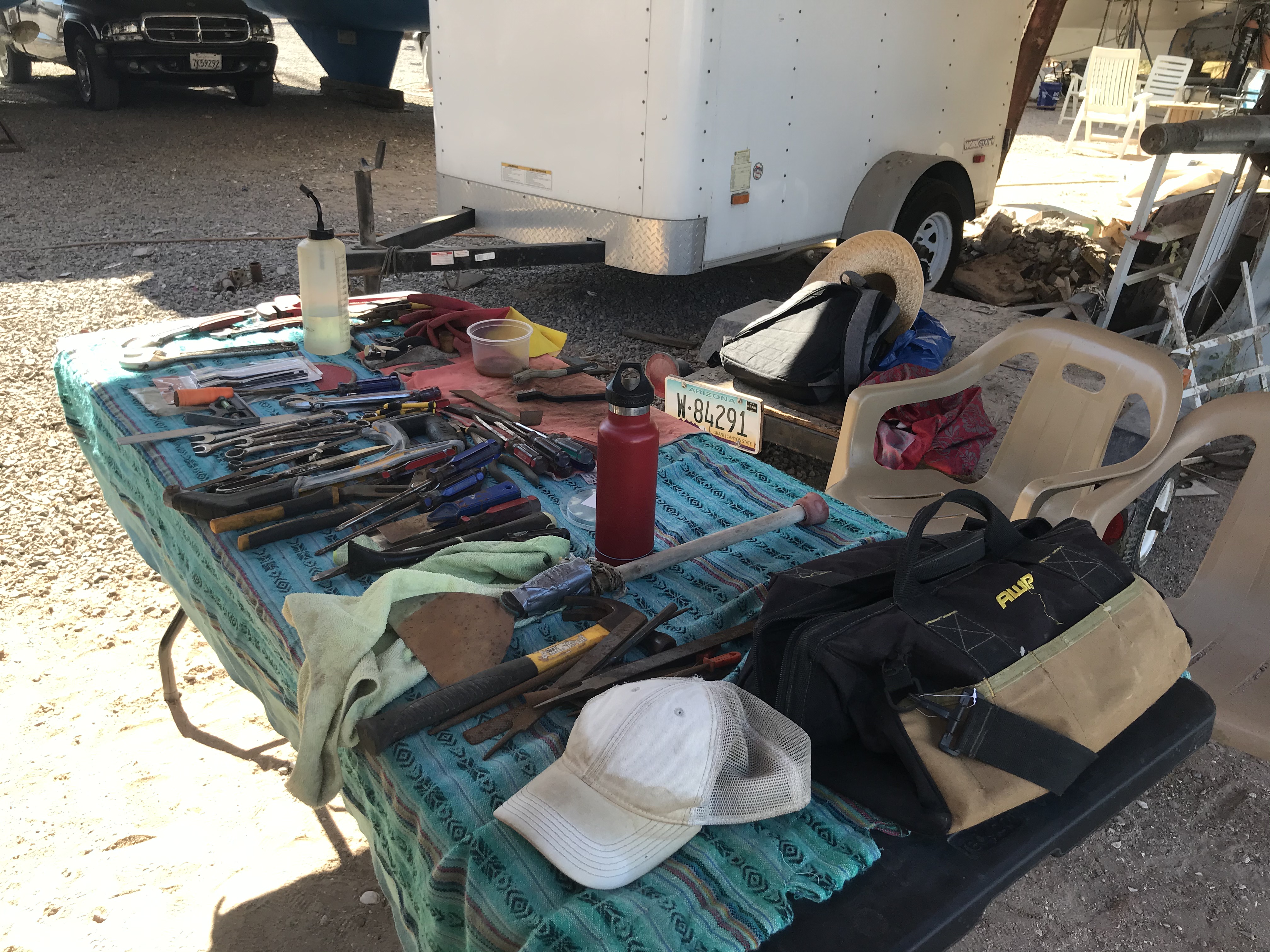
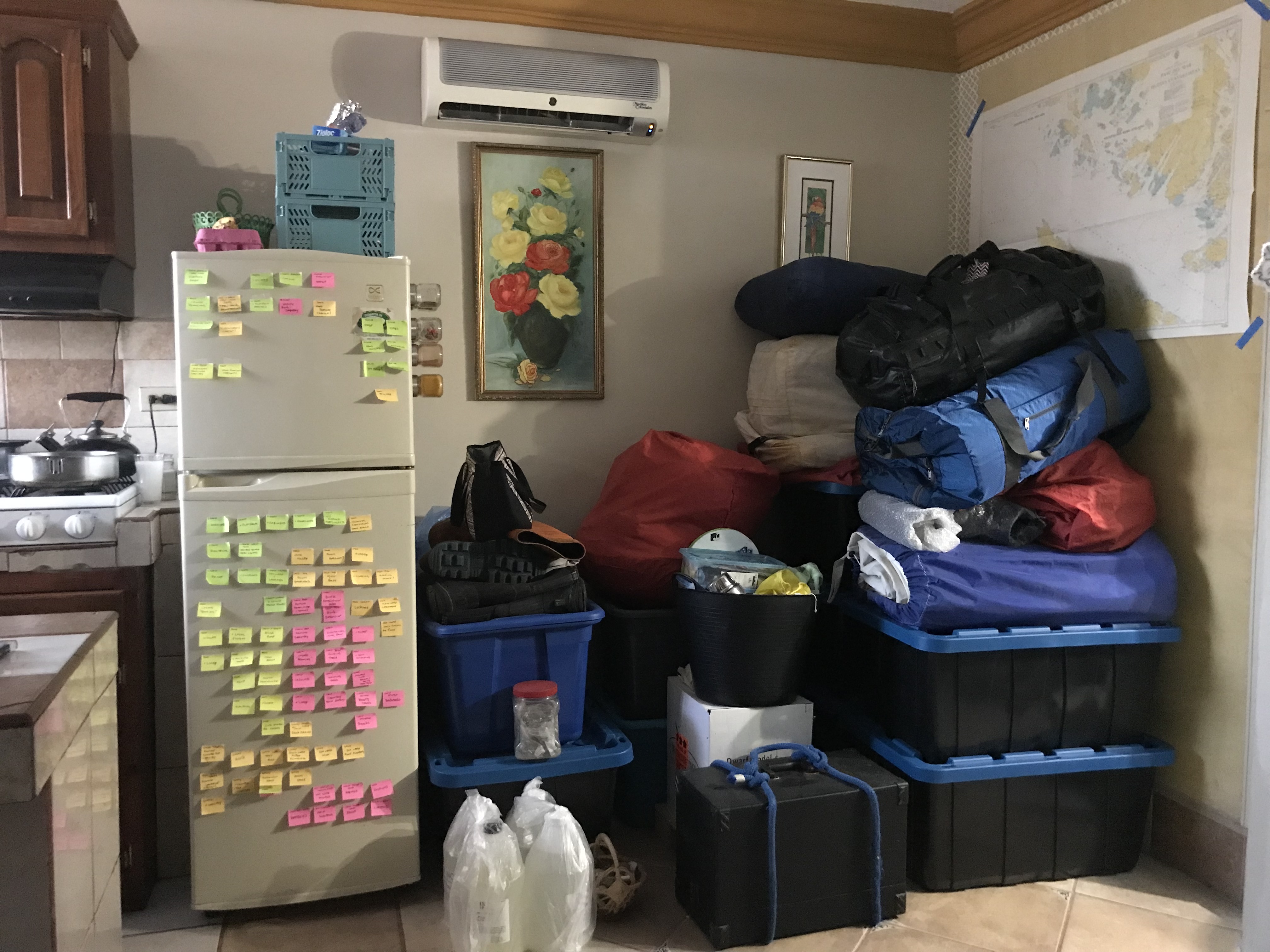
The refit is moving along now. We have taken steps to make things easier: our tools are ready to go, our workspace is clear, and we have what we need to move forward with our immediate jobs. It took a day to clean and organize our tools. Our Grandpa tools needed some tender loving care. All the tools are fairly young, but due to conditions in some of the storage lockers aboard, they have aged rapidly. The rented apartment has come in handy. We have pushed in as much as we can reasonably fit. Sails are stacked on bins. Buckets are stacked on boxes. Now that everything is off the boat, we have trouble remembering how all this stuff fit aboard little Dawn Treader. Added to the pile are some materials we had sent to Lukeville, AZ. With these, we now have all the items we need for our epoxy and fiberglass kit. We also made a trip to the big box hardware stores in the United States, and spent a few hours navigating the aisles.  

There are still big things missing from our supplies. We wish it were easier to find insulation and plywood, and we’ll need these and other things sooner rather than later. But, for now, at least we can keep going…

V-Berth Insulation, Part 1, Dismantle and Refit Plan

We spent the first few weeks of this refit period adjusting to life on land. We made trips away from the boat to see family. We gathered tools. We moved ourselves and everything off the boat. In week five, we took real action at Dawn Treader, and the boat was changed in a day.

Dawn Treader in the Boatyard

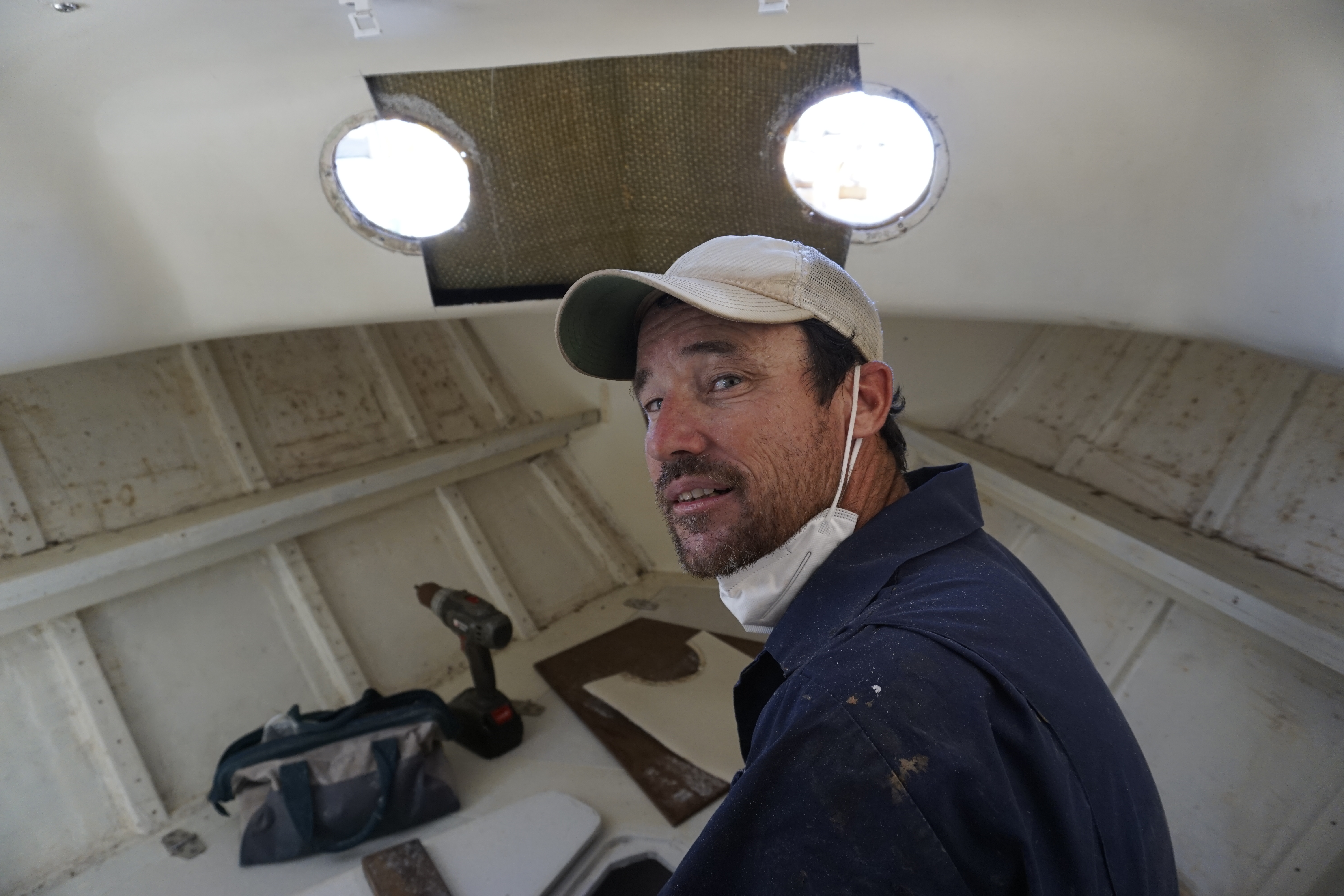
The V-Berth was dismantled. The side panels, insulation, port lights, and headliner were removed. The headliner was cut out with a multi-max. Roughly 70 percent of the liner now sits against the fence behind the boat. We were pleased that so much was removed so quickly. The liner was largely unattached to the deck above. We will remove the remaining sections of liner when we remove the thru-bolted handrails and stanchions on deck.

We found thin stripes of mold on the insulation when we removed the sealing strips of plywood on the sides of the V-Berth. We found mold behind the insulation when we removed the plastic panels and insulation above the shelves. We found mold on the backside of the headliner, around the border, the outside inch, when we cut out the liner in sections. Wherever air was able to flow a little bit, there was a little bit of mold. 

All of what we’re removing on the sides of the V-Berth, the insulation, panels, and sealing strips, we installed in 2015. This installation proved inadequate during three years sailing in colder climates. We made mistakes. We did not go far enough. We did not reimagine the V-Berth well for cold climates. As a result, we used this valuable living space for storage instead of sleeping. The mold in difficult to clean spaces was an issue, another was condensation. The original, uninsulated headliner created a large surface for condensation. Occasionally, we had rain inside. Big fat drops formed on the coachroof. We also had condensation problems on the overhead hatch, the hardware that held the side panels up, and on the metal port light frames.

Many sailors fight condensation and mold. We hope our time in the desert, drying out and refitting Dawn Treader, will better prepare us for these struggles. We have learned many lessons in the past few years, and now we are re ready to try again. Our efforts will be more complex and lengthy this time. Our plans include adding an insulation supporting framework under the deck, and more of everything: insulation, heat, ventilation, air circulation, and access (we plan to widen the opening to the V-Berth). We plan to install different port lights. We will also replace the V-Berth platform again. The plywood delaminated in the rainforest. Our primary goal is to make the V-Berth inhabitable in all climates. Let’s see how it goes…

Cockpit Lockers

After removing the engine, we were left with a huge open space under the cockpit. No longer needing to access machinery, we are able partition the space into lockers for added structure and watertight integrity. Continue reading Cockpit Lockers

Propeller Aperture

The last steps of removing our inboard diesel engine were removing the propeller and filling the aperture. Both created a substantial drag; filling the area has enhanced Dawn Treader’s ability to sail in light winds. We are quicker to accelerate, and consistently achieve faster speeds.  We are amazed with how our sailing performance has improved, and it makes voyaging without an inboard diesel easier! Continue reading Propeller Aperture

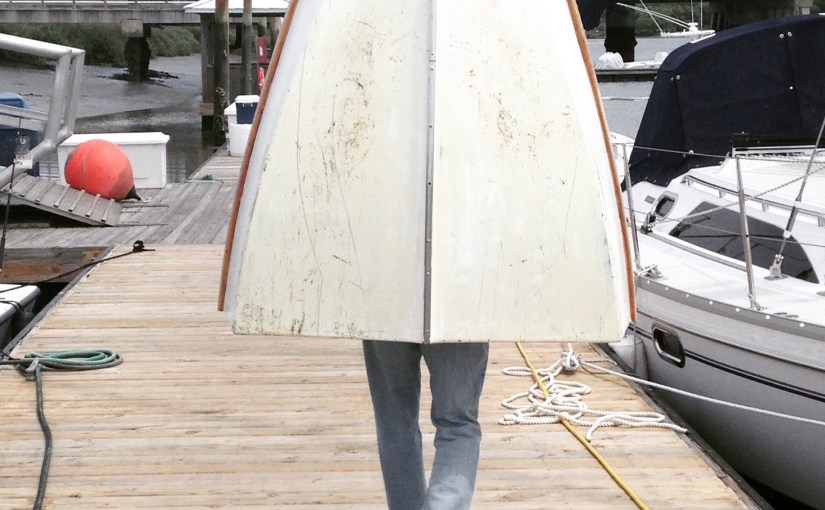
Nesting Dinghy – Junior

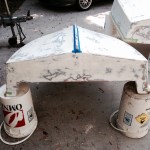
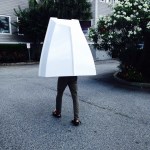
Junior was born in 2013. He was built in Beaufort, North Carolina according to plans by Graham Byrnes.

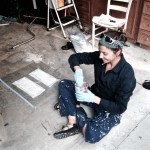
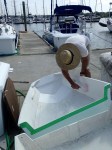
After 2 years of sailing, Junior was ready for some TLC. His makeover was our first project upon return to the states in spring of 2015.


Check out this short video of Brian taking Junior apart in the water: Video: Nesting Dinghy, Quick Disassembly.

Exterior Paint

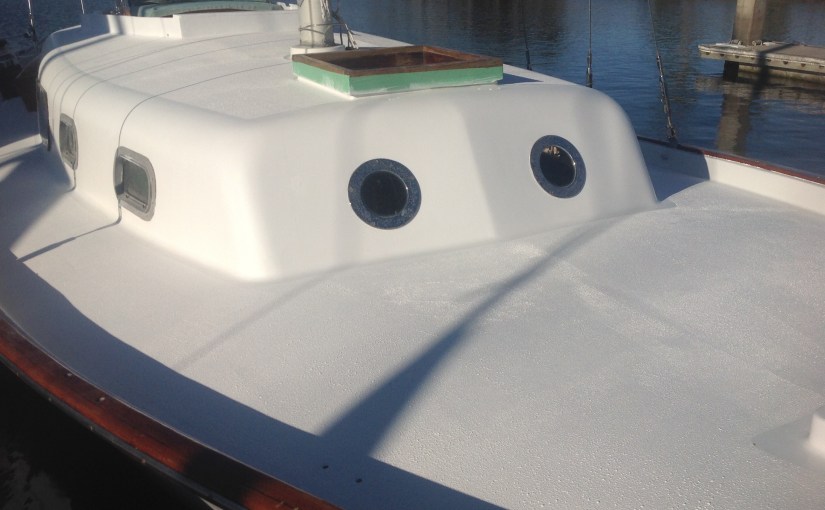
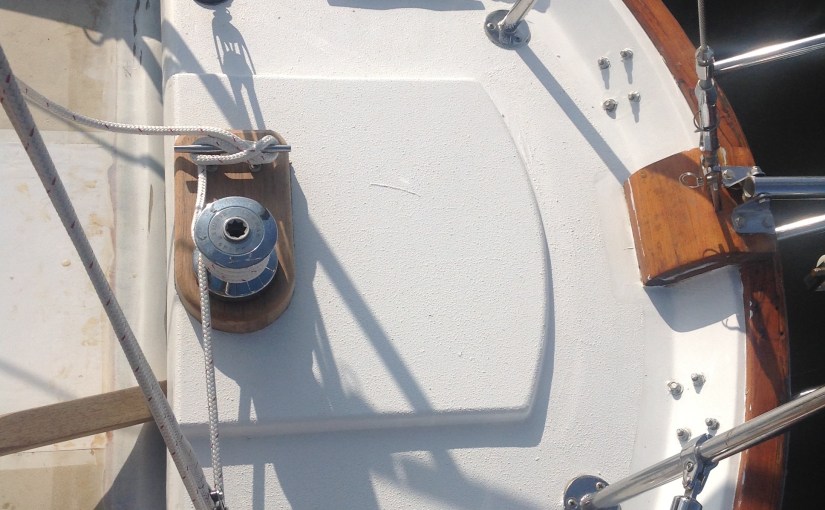
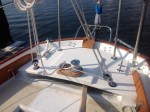
Our new spring 2014 deck paint was interlux perfection, and kiwi grip for non-skid. After our 2015 exterior construction projects, we’ll be painting again. We like the old saying…If it doesn’t move paint it, if it does move, give it a paintbrush.

Tiller Conversion

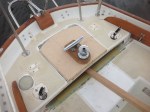
A previous owner of Dawn Treader had converted its tiller to  rack and pinion wheel steering (bronze components and housing made this a heavy option). Simplicity, performance with wind vane, and weight reduction led us to change back to tiller. During the conversion, rotten deck core was replaced, vent cowls were sealed, a laminated tiller and new hardware (stainless steel cleats, main sheet wench, and main sheet blocks) were added.

Deck Core

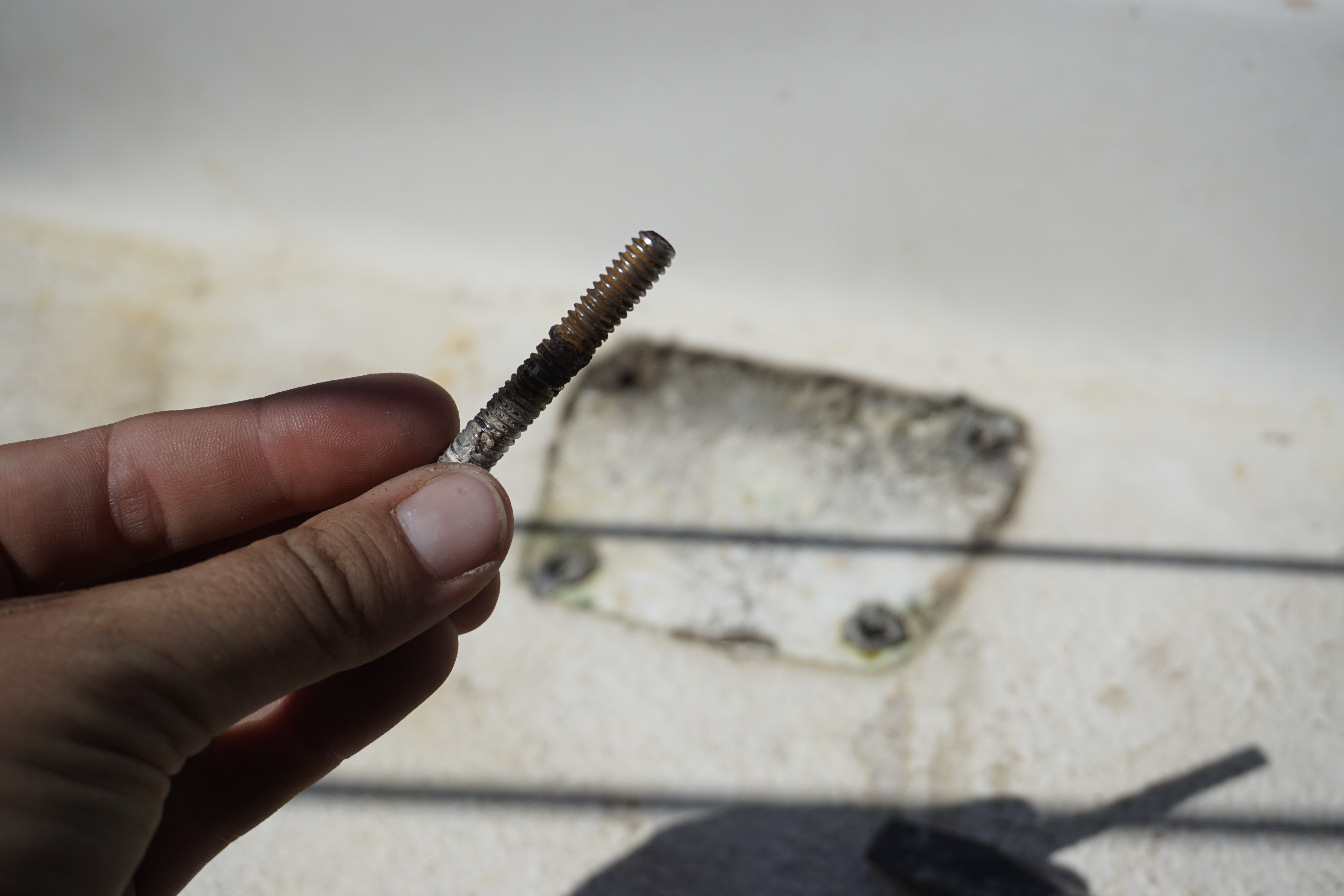
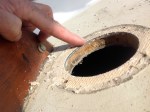
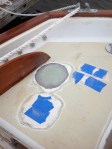
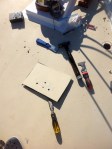
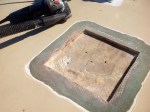
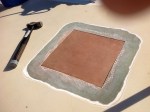
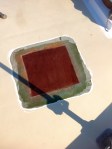
Rotton deck core found! Located under the old anchor mounting hardware this spot was cut out and replaced with marine plywood.